

Most people underestimate how long wet carpet actually takes to dry. You’ll see timelines anywhere from six hours to three full days, and that range isn’t just vague guessing. It’s the difference between a clean carpet shampooing and a basement flood with standing water. The real question isn’t just how long it takes. It’s whether your carpet and padding will dry fast enough to avoid mold, which can start growing in as little as 24 hours.
Carpet Drying Timeframes by Water Damage Scenario

Wet carpet usually takes 6 to 72 hours to dry completely. It depends on how the water got there and how much soaked in. The clock starts the second water hits your carpet, and you’re racing against a tight deadline. Mold can start growing under wet carpet in as little as 24 to 48 hours, so your drying timeframe isn’t just about convenience. It’s about stopping a much bigger problem before it starts.
| Scenario | Typical Drying Time | Action Needed |
|---|---|---|
| Professional cleaning or shampooing | 6-12 hours | Run fans and open windows for airflow |
| Small spill or pet accident | 12-24 hours | Blot immediately, extract with wet-dry vac, use fans |
| Significant leak or burst pipe | 24-48 hours | Extract water, run dehumidifier, consider professional help if widespread |
| Flooding or standing water | 48-72 hours | Professional extraction recommended, padding likely needs replacement |
The 6 to 12 hour range applies when water volume is limited and you extract it quickly. Professional carpet cleaning falls here because cleaners use powerful equipment that removes most moisture during the process. Small spills that get immediate attention with towels and a wet-dry vacuum also dry faster. What matters is getting water out of the carpet fibers within the first hour or two, then keeping airflow steady and humidity low while the remaining moisture evaporates.
Flooding pushes drying time to 48 or even 72 hours because standing water saturates the carpet surface, the padding underneath, and sometimes the subfloor below that. Padding acts like a sponge. It holds onto moisture long after the visible carpet feels dry to the touch. When water sits for more than a few hours, it migrates down through layers. Drying has to work its way back up through those same layers. This is when professional water extraction services become worth calling. Their truck-mounted equipment and industrial air movers can handle saturation levels that household fans and shop vacs can’t touch.
How Carpet Type and Materials Affect Drying Time
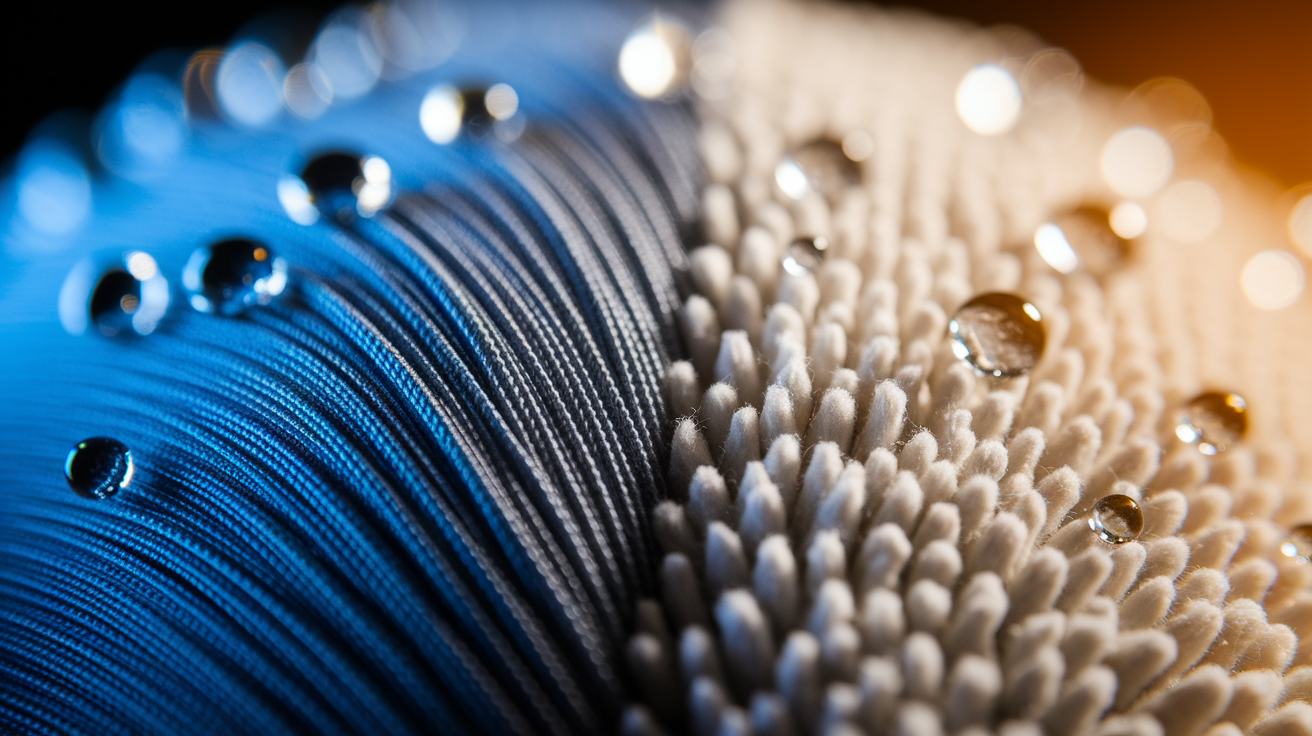
Not all carpets dry at the same rate. The difference between fiber types can add or subtract hours from your timeline. What your carpet’s made from, how it’s built, and what’s underneath it all change how water behaves and how fast you can get rid of it.
Synthetic fibers like nylon, polyester, and olefin release moisture faster and resist water absorption better than natural materials. These fibers have a tighter molecular structure that doesn’t let water penetrate as deeply. Wool and cotton carpets act like sponges. Wool can hold up to 30% of its weight in water. A wet wool carpet in a living room is holding gallons of moisture that takes days to fully release. If you’re drying a wool carpet, expect the longer end of any estimate and plan for extra dehumidifier runtime.
Pile height and construction style also affect drying time. Low-pile carpets and berber styles with tight loop construction let air reach the backing more easily. High-pile, plush, and especially shag carpets trap moisture between densely packed fibers. Air can’t get through as well, and evaporation slows down. A shag carpet with two-inch fibers might take twice as long to dry as a low-pile berber in the same conditions. Cut pile styles hold more water than loop constructions because the individual fiber ends create more surface area for moisture to cling to.
The padding and backing layers underneath your carpet hold moisture longer than what you can see on the surface. Foam padding, rubber padding, and fiber padding all behave differently when wet. Foam tends to break down when saturated for extended periods. Rubber padding doesn’t absorb much but can trap moisture against the carpet backing. Fiber padding soaks up water and releases it slowly. The carpet backing itself, usually a latex or synthetic layer, can seal moisture against the padding. You end up with a wet layer you can’t see or feel from above. Subfloors, especially wood subfloors, also absorb water and need drying time. Edges and corners of rooms take longer to dry than center areas because air circulation is weakest there.
| Carpet Type | Typical Drying Time | Special Considerations |
|---|---|---|
| Low-pile synthetic (nylon, polyester) | 6-12 hours | Fastest drying, good air penetration, water-resistant fibers |
| High-pile synthetic (plush, frieze) | 12-24 hours | Dense fibers slow airflow, requires stronger fan placement |
| Berber (looped construction) | 8-16 hours | Loop design aids drainage, but tight weave can trap moisture at backing |
| Wool or natural fiber | 24-48 hours | Absorbs 30% of weight in water, requires extended dehumidifier use |
| Shag or deep pile | 36-72 hours | Slowest drying, air can’t reach backing easily, high risk of padding issues |
Complete Equipment and DIY Drying Methods

Drying wet carpet means using multiple methods at the same time, not picking one and hoping it works. Extraction pulls out bulk water, ventilation moves moisture away from the carpet, and absorbent materials handle what’s left.
Start with extraction. This is where you remove up to 90% of the water before it has time to soak deeper. A wet-dry vacuum or shop vac is the right tool. Regular household vacuums will break if you try using them on wet carpet. You can rent a wet-dry vac from most hardware stores for about $25 to $40 per day. Run the vacuum slowly over wet areas in overlapping passes, going over the same spot multiple times as water keeps rising to the surface. For spots the vacuum can’t reach well, use the towel method. Lay clean, absorbent towels on the wet carpet and press down hard. Stand on them or place something heavy on top. The pressure forces water up into the towels. Replace saturated towels with dry ones and repeat until towels come up only slightly damp.
Once bulk water is out, airflow becomes the priority. Set up box fans in opposite corners of the room to create cross-ventilation. One fan blowing in, one blowing out. If you’ve got ceiling fans, run them on high. Add a dehumidifier and let it run continuously for several hours or overnight. Dehumidifiers pull moisture out of the air, which lets more moisture evaporate from the carpet. Your HVAC system’s fan setting (not heating or cooling, just fan) also helps by circulating air throughout the space. Opening windows works well for cross-ventilation when outdoor humidity is lower than indoor humidity. But keep windows closed during rainy or humid weather because you’ll just be pulling damp air inside. Combining multiple fans with a dehumidifier gives you the fastest results. Each piece of equipment supports the others.
After the first several hours of drying, when the carpet feels damp but not soaking wet, sprinkle baking soda across the surface. Use enough to create a light visible layer. Let it sit for 8 to 12 hours, ideally overnight. Baking soda absorbs remaining moisture from the carpet fibers and neutralizes odors at the same time. In the morning, vacuum up the baking soda with a regular vacuum (not the wet-dry vac at this point). For heat, warm air speeds up evaporation more than cold air, so turning up the heat a few degrees helps. If you use a space heater, keep it several feet away from the carpet surface. Heaters placed too close can shrink carpet fibers or cause melting and permanent damage.
Mold Growth Timeline and Prevention After Carpet Gets Wet
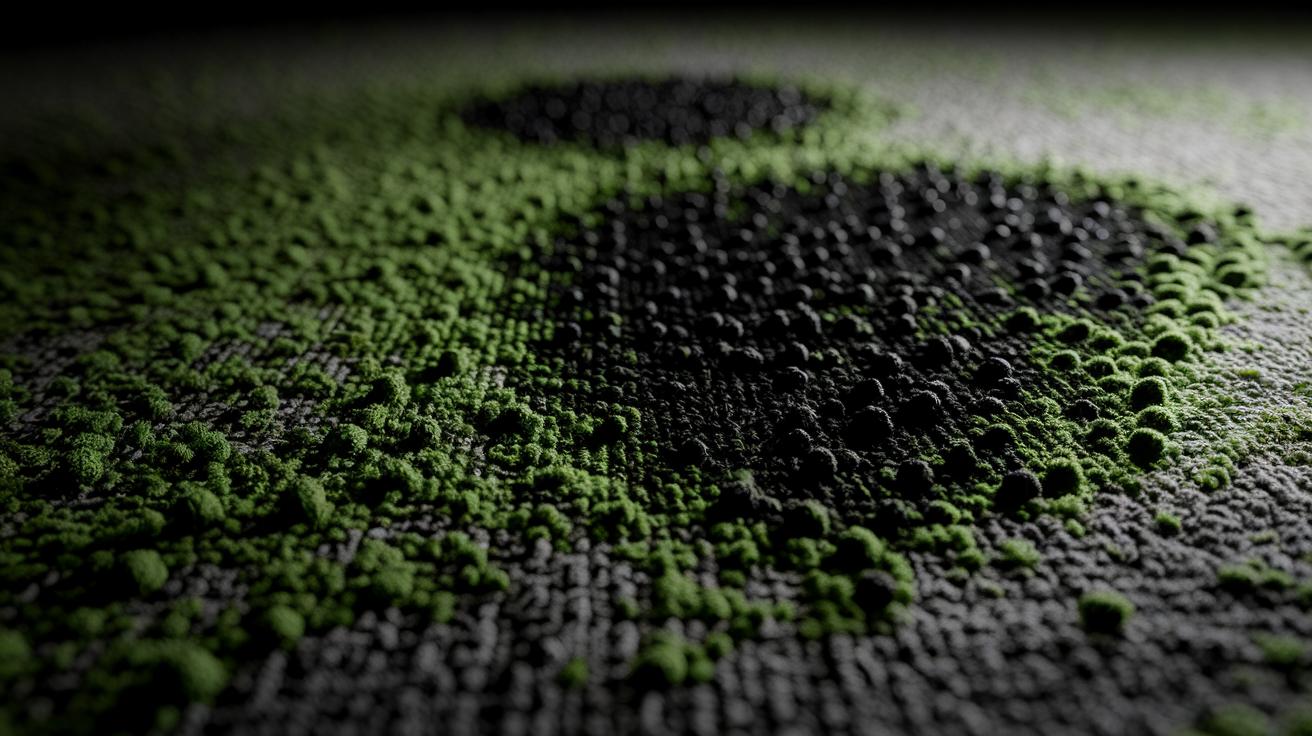
Mold can begin growing under wet carpet in as little as 24 to 48 hours, sometimes even faster in warm conditions. This window is why wet carpet is always urgent. It’s not something you can get to over the weekend. Mold spreads through spores that you can’t see, and once it starts growing in carpet padding or on the subfloor, the problem gets expensive fast.
-
Begin drying within the first 24 hours of water exposure. The sooner you start, the better your chances of staying ahead of mold.
-
Never leave carpet wet overnight without active drying equipment running. Fans and dehumidifiers should stay on continuously.
-
Run a dehumidifier throughout the entire drying period to keep humidity levels low. Mold needs moisture in the air to grow, not just wet materials.
-
Apply baking soda after 8 to 12 hours of drying to pull out remaining moisture and control odors that signal bacterial growth.
-
Monitor for musty smells, which are often the first sign of mold even before you see visible growth.
Mold exposure creates health risks, especially for people with asthma, allergies, or weakened immune systems. Respiratory issues, coughing, skin irritation, and allergic reactions are common responses to mold spores in the air. Once mold establishes itself in carpet, it doesn’t stay there. Spores spread to walls, into HVAC ducts, and behind baseboards. What starts as a wet carpet problem becomes a whole-room or whole-house issue.
If your carpet has been wet for more than 72 hours, mold growth is highly likely and you’re past the prevention stage. At that point, padding replacement is almost always necessary because mold grows through porous padding materials and can’t be fully removed once established. Professionals use antimicrobial treatments to sanitize carpet and subfloors in contaminated situations, but some materials just need to come out. Waiting too long turns a drying project into a tear-out and replacement job.
When Wet Carpet Requires Professional Water Damage Restoration
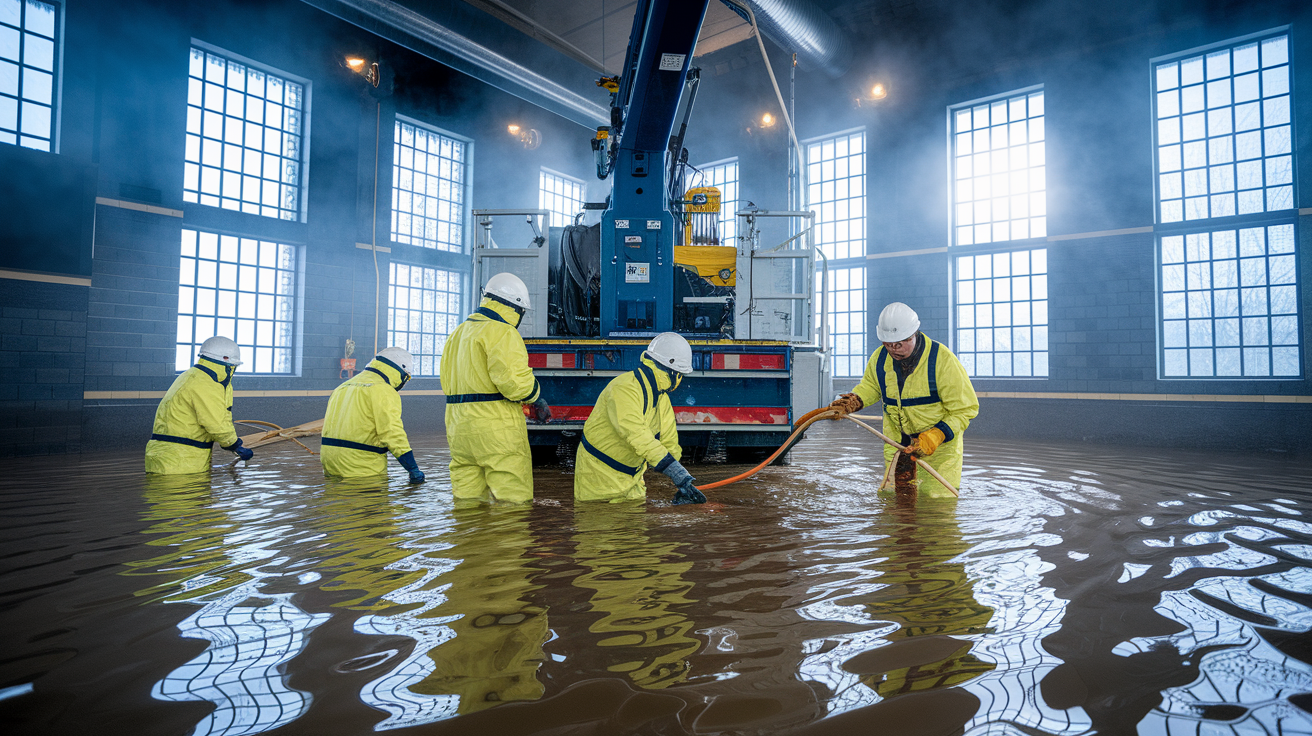
Some water damage situations are too severe, too contaminated, or too widespread for safe DIY handling. Knowing when you’re out of your depth prevents health risks and saves time when every hour counts.
- Standing water covering large areas or multiple rooms
- Water has been present for 48+ hours without active drying
- Sewage backup or contaminated water (category 2 or 3 water)
- Visible mold growth already present on carpet, walls, or baseboards
- Water damage affecting subfloor or structural elements like joists
- Extensive padding saturation throughout the room with no dry spots
- Strong persistent odor despite drying efforts and cleaning
Water gets categorized by contamination level, and the category determines how you should handle it. Clean water (category 1) comes from supply lines, like a burst pipe behind the washing machine. Dirty water (category 2) comes from appliances like dishwashers or washing machines, or from toilet overflow that’s just water (no solids). Contaminated water (category 3) includes sewage, water from outside flooding that mixed with ground contaminants, or any water that’s been standing for days and growing bacteria. Categories 2 and 3 require professional sanitation and disinfection because the health risks from bacteria, viruses, and pathogens go beyond what household cleaning can safely address. Trying to DIY carpet drying after sewage backup is a health gamble you shouldn’t take.
Professional water damage restoration services use equipment that removes moisture faster and more completely than anything you can rent or buy for home use. Truck-mounted extractors have ten times the suction power of a shop vac. Industrial air movers push hundreds of cubic feet of air per minute. Your box fan moves maybe 2,000 CFM, while a professional air mover moves 5,000+ CFM. Commercial dehumidifiers pull gallons of water from the air per day, not pints. Moisture meters let pros check subfloor moisture levels through the carpet without tearing anything up. They also apply antimicrobial treatments that prevent mold growth during drying. What might take you four or five days with household equipment, a professional crew completes in 24 to 48 hours with thorough results.
Common Carpet Drying Mistakes That Extend Timeframes

Certain actions that seem logical or helpful actually trap moisture and extend drying time, sometimes causing permanent damage in the process.
- Walking on wet carpet pushes water deeper into padding and subfloor instead of letting it evaporate upward
- Covering carpet with rugs, mats, or plastic blocks airflow completely and creates a sealed moisture pocket
- Using a regular vacuum cleaner instead of wet-dry vacuum. Regular vacuums aren’t built for water and will short out or break.
- Placing space heaters too close to carpet surface causes fiber melting, shrinkage, or scorch marks
- Leaving carpet wet overnight without fans or dehumidifiers running just gives mold a head start
- Closing up the room to “keep moisture contained” does the opposite of what you want. It traps humidity and slows evaporation.
Each of these mistakes compounds the problem. Trapped moisture creates perfect conditions for mold and bacterial growth. Heat damage from a space heater placed directly on carpet causes permanent texture changes and discoloration that won’t come out. Foot traffic on wet carpet doesn’t just slow drying. It spreads contamination from one area across the whole floor and grinds water down into layers that are harder to reach. Inadequate ventilation means moisture has nowhere to go, so it just sits in the fibers and padding, cycling between slightly damp and still damp without ever fully drying.
Proper moisture assessment prevents the mistake of thinking carpet is dry when it isn’t. The surface might feel dry to a quick touch, but padding and subfloor can stay wet for days longer. Carpet backing traps moisture against padding even after the visible fibers feel normal. Press down firmly with your hand on different spots. If you feel coolness or slight dampness, drying isn’t complete. Check problem areas that always dry slowest: edges along walls, corners, thick padding zones, and anywhere furniture was sitting during the water event. Color variations can indicate trapped moisture. Wet areas often look slightly darker than surrounding dry sections. A musty odor is another sign of incomplete drying and usually means moisture is still present somewhere in the layers. Professionals use moisture meters to get objective readings through carpet into padding and subfloor. These meters take the guesswork out of the process and prevent closing up a room before everything underneath is actually dry.
Cost and Insurance Considerations for Wet Carpet Restoration

DIY carpet drying costs depend on what equipment you already own and what you need to rent or buy. Wet-dry vacuum rental runs $25 to $40 per day from most hardware stores. Dehumidifier rental costs $30 to $60 per day, or you can buy a decent home unit for $200 to $400 if you want to keep it for future use. Box fans cost $15 to $30 each, and you might want two or three. Add baking soda, extra towels, and time, and you’re looking at roughly $75 to $150 total for self-managed drying of one average-sized room. That’s assuming you catch the water quickly and it’s clean water from a supply line.
Professional water damage restoration services typically charge $3 to $7 per square foot for water extraction and drying. For an average 12×15 room (180 square feet), expect $500 to $2000 depending on severity, how long water sat, and what equipment they need to bring. That might sound steep compared to DIY costs, but pros finish in a fraction of the time and guarantee complete moisture removal with documentation. When you’re working against a 24 to 48 hour mold growth window, the speed advantage alone can be worth the cost. You’re also paying for knowledge about what can be saved and what needs replacement, which prevents the expensive mistake of trying to salvage materials that will fail later.
Most homeowner insurance policies cover sudden water damage like burst pipes, water heater failures, or appliance malfunctions. They typically don’t cover gradual leaks or damage from lack of maintenance. Flooding from outside sources requires separate flood insurance, which is a different policy entirely. If you’re filing a claim, document everything from the start. Take photos showing water extent, save receipts for equipment rental and materials, write down the timeline of what happened and what you did. Some policies require professional restoration for coverage, while others allow DIY if you document the work properly. When deciding between restoration and replacement, consider carpet age, contamination level, and whether restoration costs approach replacement value. A ten-year-old carpet that’s been soaked with category 3 water usually makes more sense to replace than restore, even if restoration is technically possible.
Protecting Furniture and Preventing Stains During Carpet Drying
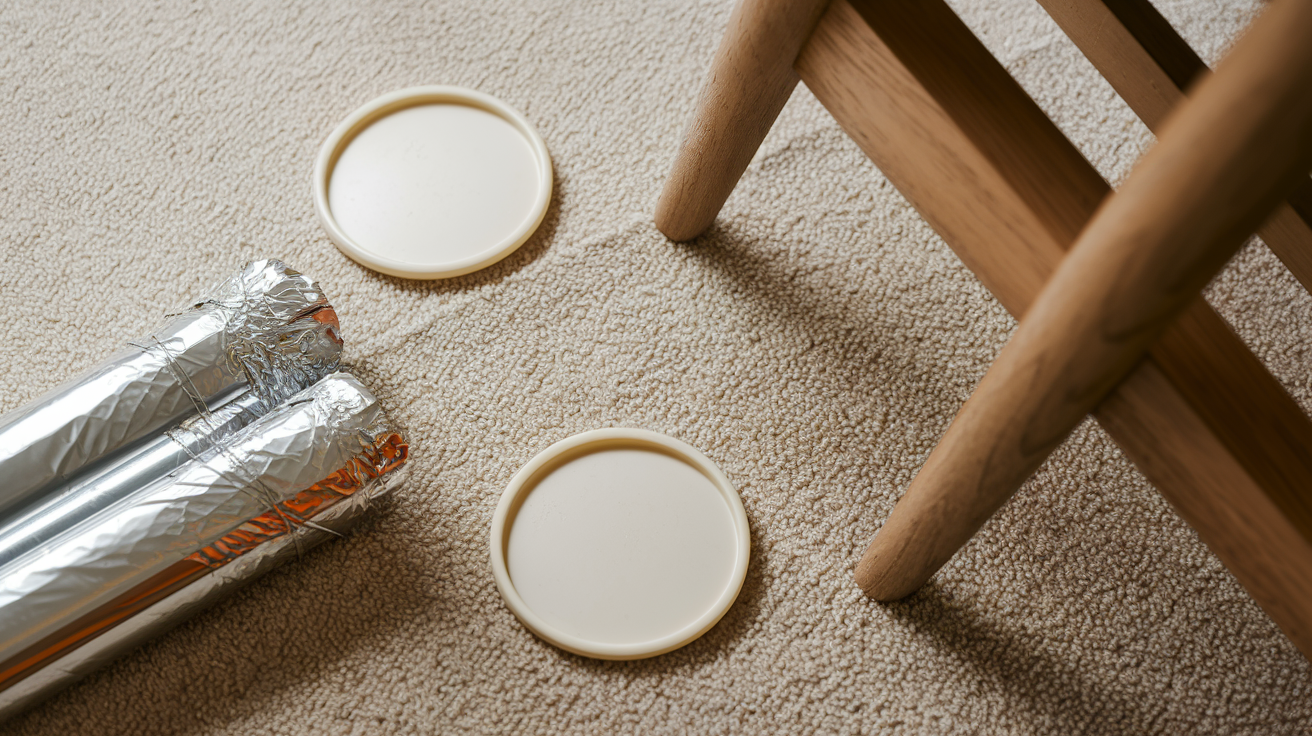
Furniture left sitting on wet carpet causes two problems. The furniture can stain the carpet, and the carpet can’t dry under the furniture.
Wood furniture legs bleed stain and dye onto wet carpet fibers. Oak, walnut, and any stained wood can leave permanent marks that won’t come out even after the carpet dries. Metal furniture legs rust when they sit in moisture, and that rust transfers to carpet as orange or brown staining. The fix is creating a barrier between furniture and carpet before moisture causes damage. Wrap wood and metal furniture legs with aluminum foil, tucking the foil up several inches. You can also use wax paper, plastic furniture coasters, or small blocks of plastic under each leg. Better yet, move furniture completely out of the wet area into another room or up onto a tarp in the garage until the carpet is dry.
Traffic control matters more during drying than most people realize. Every footstep on damp carpet pushes water deeper into padding instead of letting it evaporate upward. Shoes track in dirt that mixes with moisture and creates mud in the carpet fibers. If someone walked through the water damage area before you got it contained, they’re spreading that contamination to other rooms on their shoes. Set up physical barriers like chairs or storage bins to mark no-walk zones. Put up a sign if other people live in the house. Find alternate routes through your home, even if it’s less convenient for a few days.
Protecting areas next to wet carpet prevents moisture migration and secondary damage. Place plastic sheeting or thick towels at doorways between wet rooms and dry rooms. This keeps moisture from wicking under the door and into adjacent carpet. Remove any area rugs sitting on top of the wet carpet. They trap moisture underneath and create sealed pockets where mold loves to grow. Pull furniture away from walls by at least six inches to ensure air can circulate along baseboards. Baseboards and drywall will wick water up from wet carpet, so keeping air moving along the wall helps dry both the carpet edge and the wall base before moisture causes paint bubbling or baseboard swelling.
Final Words
So how long does wet carpet take to dry? Between 6 and 72 hours, depending on the scenario and your response.
Small spills dry fast with quick action. Flooding takes days and might need pros.
Start extraction in the first few hours. Run fans and a dehumidifier together. Check padding and edges, not just the surface.
If you’re past 48 hours or dealing with contaminated water, call someone with real equipment. Mold doesn’t wait, and neither should you.
Get it dry, keep it dry, and you’ll save the carpet and the room underneath.
FAQ
How can I dry my wet carpet fast?
You can dry your wet carpet fast by using a wet-dry vacuum to remove up to 90% of the water, then running fans and a dehumidifier continuously while keeping windows open in dry weather for cross-ventilation.
Will wet carpet dry on its own?
Wet carpet will eventually dry on its own, but leaving it without active drying equipment creates a high mold risk within 24-48 hours and extends drying time to several days or longer depending on humidity conditions.
How long can carpet be wet before it is ruined?
Carpet can remain wet for 24-48 hours before mold growth begins, and after 72 hours of being wet, mold contamination becomes highly likely and padding typically requires replacement to prevent health risks and permanent damage.
How long does it take for carpet to dry after a water leak?
Carpet takes 12-24 hours to dry after a small water leak with proper extraction and airflow, while significant leaks or flooding can require 48-72 hours and often need professional equipment for complete moisture removal.
What type of carpet dries the fastest?
Low-pile synthetic carpets made from nylon or polyester dry the fastest, typically within 6-12 hours, because synthetic fibers release moisture more quickly than natural fibers and short pile allows better air penetration.
Should I use heat to dry wet carpet?
You should use warm air to dry wet carpet because heat accelerates evaporation, but keep space heaters several feet away from carpet to avoid shrinkage, melting fibers, or permanent damage from excessive direct heat.
Can I walk on carpet while it’s drying?
You should not walk on carpet while it’s drying because foot traffic pushes moisture deeper into padding and subfloor, spreads contamination, and significantly extends the drying time by compressing wet fibers.
When should I replace wet carpet instead of drying it?
You should replace wet carpet instead of drying it when water has been present for more than 72 hours, sewage or contaminated water caused the damage, visible mold is already growing, or padding is completely saturated.
How do I know if my carpet is completely dry?
Your carpet is completely dry when pressing firmly on the surface and padding shows no dampness, the carpet feels room temperature instead of cool to touch, and no musty odor is present after ventilation.
What equipment do professionals use to dry carpet?
Professionals use truck-mounted water extractors, industrial air movers, commercial dehumidifiers, and moisture meters to monitor subfloor dryness, which removes moisture far more effectively than household fans and shop vacuums.
Does baking soda help dry wet carpet?
Baking soda helps dry wet carpet by absorbing remaining moisture after initial extraction, and should be sprinkled on damp carpet and left for 8-12 hours overnight before vacuuming for best moisture absorption and odor control.
Should I open windows to dry wet carpet?
You should open windows to dry wet carpet only during dry weather to promote cross-ventilation and airflow, but keep windows closed during rainy or humid conditions because moisture in outdoor air will slow drying.