

You’re probably thinking the carpet looks okay after pulling up the water, so maybe you can skip replacing it and just swap out the padding. But here’s the problem. That visible dryness on top doesn’t tell you what’s happening below, and padding never dries properly once it’s flooded. The real decision comes down to what kind of water soaked your floors, how fast you acted, and whether you’re dealing with clean supply line water or something contaminated.
Quick Decision Guide: Replacing Carpet and Padding Based on Water Type and Timeline
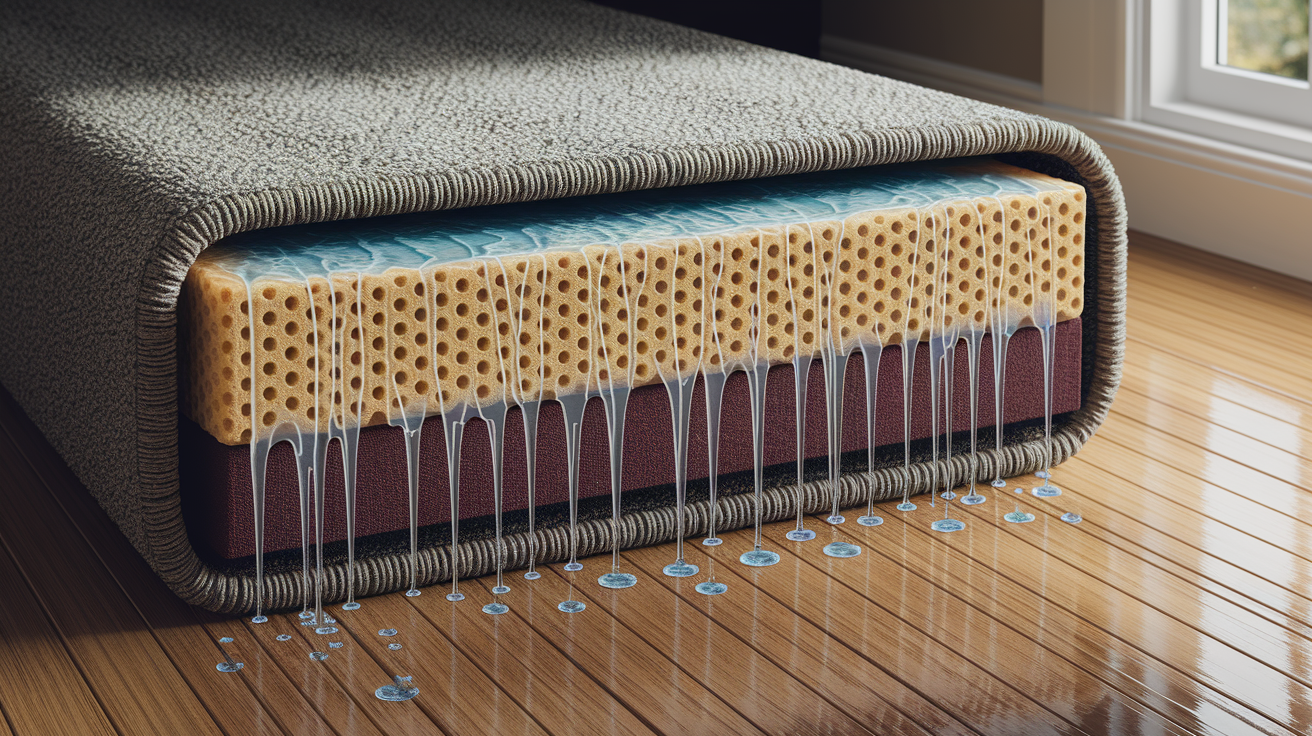
Carpet padding needs to be replaced pretty much always after a flood. Doesn’t matter what kind of water hit it or how fast you moved. Padding works like a sponge through its entire thickness and won’t dry properly no matter what you do. Carpet’s a different story. Whether you can save it depends on three things: how contaminated the water was, how quickly you acted, and how soaked the material got.
| Water Type | Response Time | Carpet Action | Padding Action | Key Factors |
|---|---|---|---|---|
| Category 1 Clean Water | Within 6 hours | Salvage possible with professional extraction | Replace immediately | Less than 50% saturation, professional equipment required |
| Category 1 Clean Water | 6-48 hours | Salvage only if less than 50% saturated | Replace immediately | Professional drying must start within 12 hours, high failure risk |
| Category 1 Clean Water | Over 48 hours | Replace mandatory | Replace immediately | Mold development guaranteed, health hazard present |
| Category 2 Gray Water | Any timeline | Replace in most cases | Replace immediately | Bacterial contamination, antimicrobial treatment insufficient for padding |
| Category 3 Black Water | Any timeline | Replace immediately | Replace immediately | Serious health hazards, viruses, bacteria, parasites, toxic chemicals |
| Any Category | Mold/odor present | Replace immediately | Replace immediately | Colonization established, complete removal impossible |
Category 1 water is the cleanest you’ll deal with. It’s coming from supply lines, broken pipes, or fresh rainwater without contaminants mixed in. You might save the carpet if you jump on it within six hours and bring in professional extraction gear. That 6 to 48 hour window? You can maybe salvage things if less than half the carpet got saturated and pros start drying it immediately. But once you’re past 48 hours, you’re looking at replacement. Mold’s going to develop no matter how hard you try to dry things out at that point.
Category 2 is gray water. This is what flows from appliances, washing machines, dishwashers, or a toilet overflow that’s just urine. The water’s got moderate bacterial contamination. Most of the time, the carpet needs replacing. Professional antimicrobial treatment might save newer carpet if you get on it within four hours, but the padding still has to go. Contamination penetrates its cellular structure too deeply.
Category 3 black water includes sewage backups, outdoor flooding, or any water that’s been sitting around over 48 hours. Both carpet and padding come out immediately. You’re dealing with viruses, bacteria, parasites, and toxic chemicals. Don’t even think about trying to salvage anything here. Doesn’t matter how fast you respond or what equipment’s sitting in your garage.
Some signs override any salvage consideration and tell you replacement’s the only option. Visible mold anywhere on the carpet or backing means there’s no negotiating. Musty or sewage smells that won’t leave indicate bacterial colonies have set up shop throughout the material. Carpet over 10 years old doesn’t have the structural integrity to survive water damage recovery. Water standing over 48 hours before you got to it guarantees contamination. Subfloor damage, delamination where the backing separates from fibers, or family members developing health symptoms all point to the same answer. Replace everything.
The 48-Hour Critical Window and Mold Development Timeline

Mold spores are already floating around in your indoor air right now. They become a problem when they find moisture, organic material like your carpet fibers or padding, and get 24 to 48 hours to settle in and multiply. That’s why you’ve got this 48 hour rule for all water damage situations.
Surface drying doesn’t tell you anything useful. The padding underneath and the subfloor below need to hit acceptable moisture levels under 12 to 14 percent. Walking across carpet that feels dry when you touch it or looks lighter doesn’t mean water’s actually left the deeper layers where mold grows fastest.
Here’s your emergency response timeline for the first 48 hours:
0 to 2 hours: Stop the water source completely. Shut off electricity at the breaker panel before you step into any flooded room. Get standing water out using a wet vac or towels and buckets.
2 to 12 hours: Lift carpet edges around the whole perimeter. Pull out and toss all the padding. Every single piece needs to go.
12 to 24 hours: Get industrial drying equipment running. Position fans so they’re blowing under the lifted carpet edges. Run dehumidifiers continuously in the affected space.
24 to 36 hours: Test moisture levels with a moisture meter. Check the carpet backing and subfloor at multiple spots. Write down all the readings.
36 to 48 hours: Verify your final moisture readings show levels below 12 percent throughout everything before you make any decision about putting things back.
The reality is that drying things properly is tough even with professional equipment. Heavily saturated carpet and padding rarely dry completely within that safe window. Padding’s designed to absorb and hold moisture for cushioning purposes. That same property means it’ll harbor bacteria and mold even after the surface looks dry to you.
Health symptoms from mold exposure include respiratory irritation, asthma attacks, allergic reactions, headaches, fatigue, and stress on your immune system. Risk goes up for children, elderly folks, and anyone with compromised immunity. Once mold establishes itself in your home, health impacts can stick around for months or years.
Mold shows up in a predictable order. Musty or sour smells arrive first, often before you see any visible growth. Carpet discoloration or dark patches come next. Visible green or black growth on the surface or backing means you’re dealing with advanced colonization. Changes in the carpet fiber texture and that persistent damp feeling complete the picture. Once mold gets into padding or carpet backing, spores dig deep into fibers. You can’t remove them completely without full replacement.
Inspecting Padding and Subfloor Damage After Carpet Flooding

What you see on the surface only tells part of the story. What’s happening underneath determines whether you’re facing a straightforward replacement or a major structural repair.
Padding replacement isn’t optional in any flood scenario. The cellular structure traps water and contaminants through the entire material thickness. No amount of extraction or fancy drying equipment can pull moisture out of padding cells completely.
Pull back carpet corners to get at both the padding and subfloor for inspection. Check the padding compression, water saturation level, and physical deterioration by pressing firmly through the thickness. Smell for musty, sour, or sewage odors that indicate bacterial growth or active mold. Look at the subfloor for dark staining, soft spots when you press down, warping, or board separation at seams. Use a moisture meter on the subfloor at multiple locations to verify readings below 12 to 14 percent. Check floor joists and support structures for water damage if you can get to the basement or crawlspace below. Take photos of all damage with timestamps visible for insurance documentation. Note any areas where padding’s compressed to less than half its original thickness.
Common padding types include rebond foam, rubber, and felt materials. All three absorb water differently but share one thing in common. They retain moisture permanently throughout their structure. Padding loses cushioning properties when it’s compressed wet. The cells collapse and won’t return to their original shape. Bacteria grows throughout the thickness in 24 to 48 hours even if the surface dries to the touch.
Subfloor replacement becomes necessary when you see specific indicators. Moisture meter readings above 14 percent after drying attempts mean water’s penetrated too deeply. Soft or spongy areas when you press firmly indicate wood rot has started. Visible mold growth or dark staining that won’t dry signals permanent contamination. Smells that persist after complete drying mean bacteria’s colonized the wood. Structural warping, board separation, or delamination of plywood layers all point to replacement. Covering up subfloor damage instead of fixing it leads to floor collapse, mold spreading through wall cavities, and health hazards that get worse over time.
Professional Carpet Restoration Versus DIY Assessment and Costs

Whether you go professional or DIY depends on the water contamination category, how much area got wet, what equipment you can get your hands on, and whether restoration actually costs less than replacement.
| Scenario | DIY Approach | Professional Required | Estimated Cost |
|---|---|---|---|
| Small clean-water spill under 10 sq ft caught within 2 hours | Feasible with wet-vac, fans, padding removal | Optional | DIY: $50-150 equipment rental |
| Clean water affecting full room within 4-6 hours | High failure risk without industrial equipment | Recommended | Pro: $2,500-4,000 for average room |
| Gray water from appliance malfunction | Not recommended due to contamination | Yes, antimicrobial treatment needed | Pro: $3,000-5,000 including sanitizing |
| Black water/sewage contact | Not safe to attempt | Yes, immediate response mandatory | Pro: Full replacement typically required |
| Mold odor or visible growth present | Beyond DIY scope, health hazard | Yes, mold remediation specialist | Pro: $2,000-6,000+ remediation plus replacement |
Professional restoration brings serious capabilities. Emergency water extraction runs $400 to $800 for immediate response. Industrial drying equipment and monitoring costs $800 to $1,500 for 3 to 5 days of continuous operation. Padding removal and disposal runs $0.50 to $1.00 per square foot. Carpet cleaning and antimicrobial treatment adds $0.35 to $0.75 per square foot. Carpet reinstallation with specialized stretching tools costs $1.00 to $2.00 per square foot. Total often hits $2,500 to $4,000 for an average room. This includes thermal imaging to find hidden moisture, commercial dehumidifiers, air movers, moisture meters, EPA registered antimicrobial treatments, and documentation for insurance claims.
Replacement costs follow a different structure. Complete padding removal and disposal runs $1.00 to $2.00 per square foot. New padding installation costs $0.50 to $1.50 per square foot. Mid grade carpet with professional installation runs $2.00 to $5.00 per square foot. Total typically lands between $3.50 to $8.50 per square foot, or $1,400 to $3,400 for a 400 square foot room.
DIY approaches only work in limited scenarios. The affected area needs to be under 10 square feet. Water must be confirmed Category 1 clean water only. You need to act immediately within 2 to 4 hours of water intrusion. You need access to a wet vac and multiple fans. You have to be willing to replace all padding completely without trying to salvage it. A moisture meter is required to verify actual drying, not guesswork. DIY salvage attempts fail frequently because of inadequate equipment, insufficient air movement, putting things back too early, and inability to treat the carpet backing properly.
Cost effectiveness factors determine whether restoration makes sense financially. Professional restoration only works for newer carpet less than 3 to 5 years old. Water must be Category 1 with response within 4 to 6 hours. Insurance needs to cover the full restoration cost. Replacement typically offers better long term value for older carpet, any contaminated water situation, or delayed response. Hidden costs tip the scale. Failed restoration requiring mold remediation runs $2,000 to $6,000 or more. Health impacts affect your family. Property value drops from persistent odors. A second replacement after failed salvage doubles your total expense.
Carpet Fiber Types and Flood Recovery Success Rates
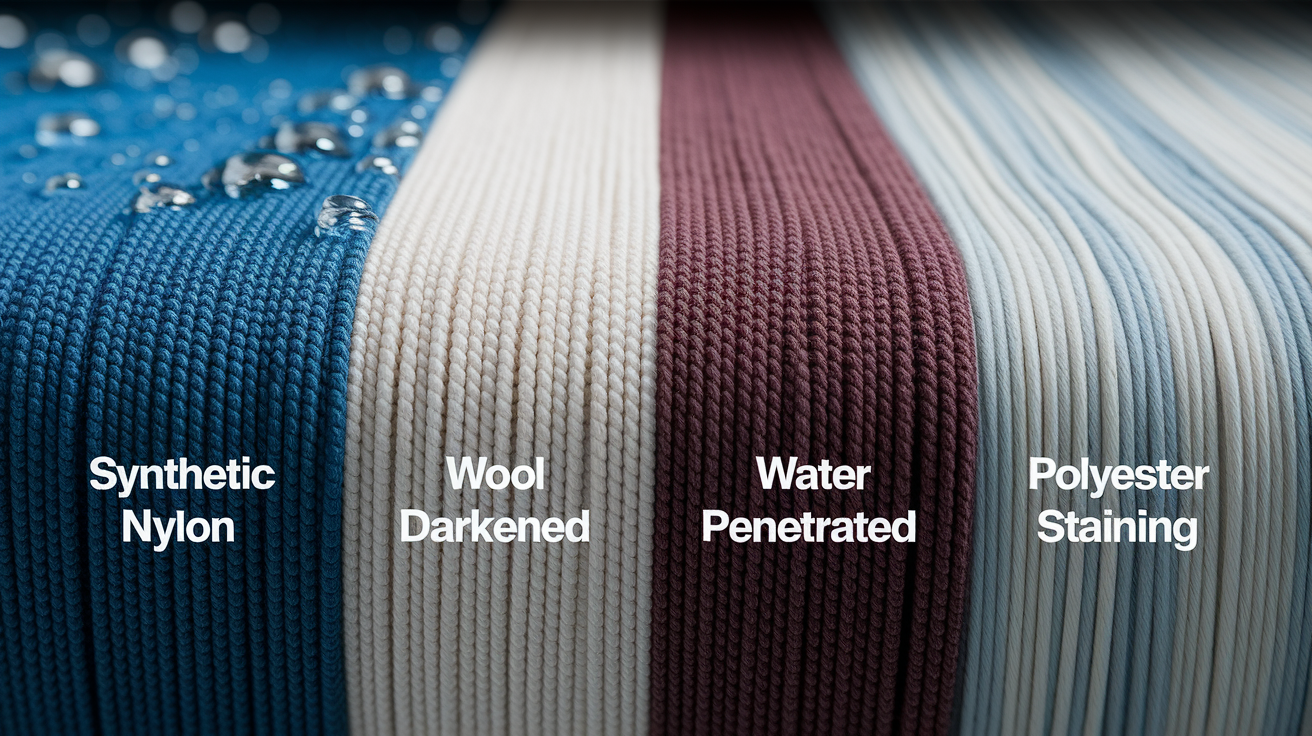
Carpet material and construction determine how much water the fibers absorb, how difficult drying becomes, and whether salvage is even possible.
Synthetic fibers dominate residential carpet installations. Nylon’s the most resilient to water exposure but backing adhesive and padding failures still require replacement in most flood situations. Polypropylene, also called olefin, resists moisture absorption in the fiber itself but traps water at the backing interface where you can’t reach it with extraction equipment. Newer synthetic carpets less than 5 years old have better recovery odds with immediate professional treatment because the backing adhesive hasn’t weakened yet. Polyester’s prone to permanent staining from contaminated water. Even clean water that sits for several hours causes discoloration that won’t come out with any cleaning method.
Natural fibers including wool and cotton are highly absorbent. These materials hold water at up to 30 percent of their fiber weight. You’ll get shrinkage of 10 to 15 percent when natural fibers dry after saturation. Color bleeding happens between adjacent dyed areas. Rapid mold growth starts within 24 hours on natural materials. These carpets almost always need replacement after significant flooding no matter what category of water you’re dealing with. Structural damage and odor retention make salvage impossible even with professional equipment and treatments.
Construction factors matter as much as fiber type. Low pile and commercial grade carpets dry faster and more thoroughly than plush, frieze, or shag styles. Carpet age beyond 7 to 10 years means existing fiber degradation has already occurred. Backing adhesive weakens over time. Soil that’s accumulated deep in the pile creates more contamination risk. Successful recovery becomes unlikely even with professional restoration efforts. Loop pile constructions like berber hold less water between fibers than cut pile styles, but backing damage determines whether you can salvage it regardless of surface construction.
Step-by-Step Water Extraction and Drying Process
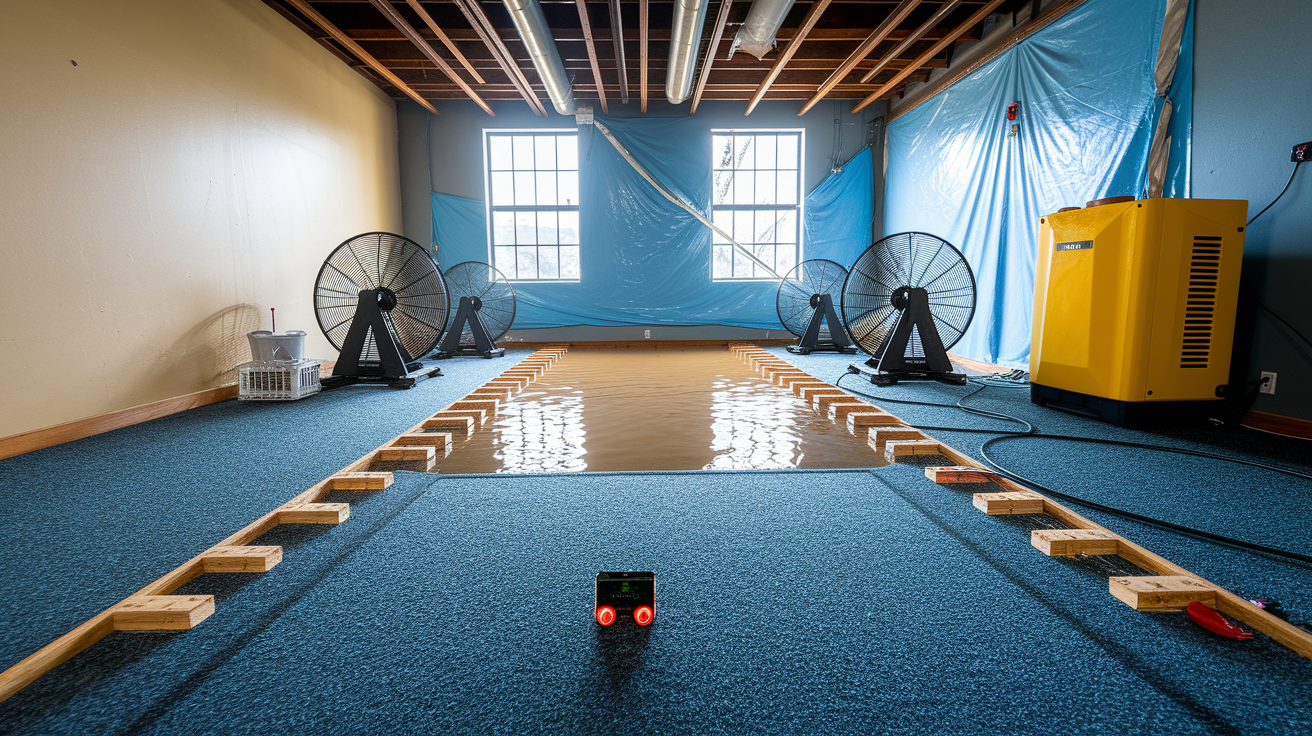
This process applies only to Category 1 clean water scenarios where you’re attempting salvage. Any contaminated water, Category 2 or 3, requires professional remediation and typically means complete replacement.
Follow this extraction and drying sequence:
Shut off electricity to affected areas at the breaker panel before you go in. This prevents electrocution risk from water contact with outlets, fixtures, or wiring.
Stop the water source immediately and remove standing water with a wet vac using slow overlapping passes. Use towels and buckets for areas the wet vac can’t reach.
Pull carpet back from all edges and remove padding completely. Toss all padding in sealed trash bags. Never try to dry and reuse padding material.
Extract water from carpet using slow wet vac motion over the entire area. Avoid going back and forth. Slow overlapping passes extract more water than rapid movement.
Elevate carpet edges using wooden blocks, PVC pipe sections, or similar spacing materials to create air channels underneath the entire perimeter.
Position fans to blow air under lifted carpet and across the exposed subfloor. Don’t just aim fans at the carpet surface where you can see moisture.
Run dehumidifiers continuously in the closed space with humidity monitoring. Keep windows closed during humid weather even though opening them feels like the right move.
Test moisture levels every 12 hours with a moisture meter at multiple locations. Continue until the subfloor reads below 12 percent and carpet backing is completely dry throughout.
Proper airflow setup requires specific positioning. Lift carpet edges a minimum of 6 to 12 inches around the entire affected area. Use spacing materials to create air channels underneath the whole perimeter, not just at entry points. Angle fans to blow under the carpet rather than across the surface. You need one fan per 200 square feet of affected area as a minimum. Keep the dehumidifier in a sealed room. Close windows during operation or you’re just drying outdoor air. Run all equipment continuously for 48 to 72 hours minimum without breaks.
Common mistakes lead to salvage failure more often than successful drying. Not removing padding completely is the single biggest failure point. Padding left in place prevents airflow to the subfloor and traps moisture permanently. Inadequate air movement with too few fans or poor positioning means wet spots stay untouched. Putting things back too early before complete drying based on how the carpet surface feels wastes all your previous work. Opening windows during humid weather introduces more moisture into the space than your equipment removes. Stopping equipment too soon because the surface looks dry ignores hidden moisture. Failing to test subfloor moisture separately from carpet means you reinstall over a wet base that’ll cause mold and odors within days.
Sanitizing and Antimicrobial Treatment Requirements
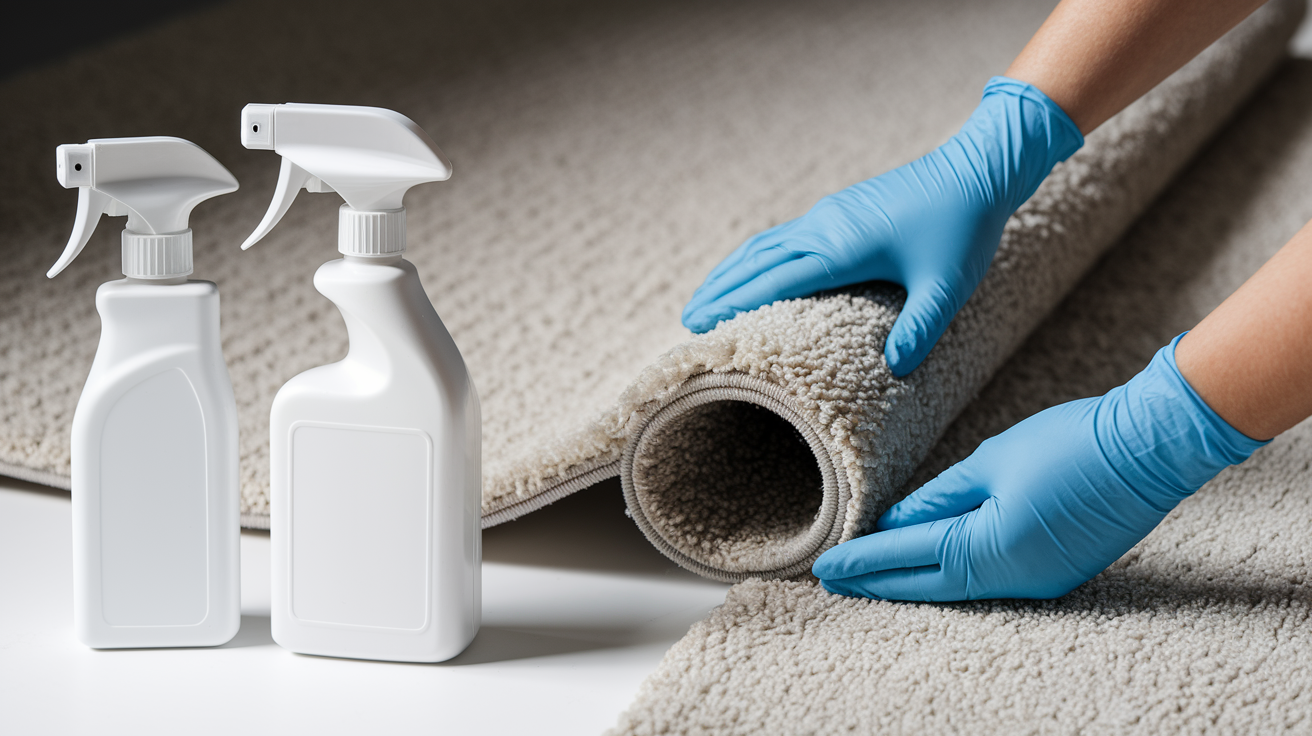
Even Category 1 clean water introduces contaminants during flooding that require thorough sanitizing beyond standard carpet cleaning methods.
After you’ve verified complete drying with moisture meter readings below 12 percent throughout all materials, start the cleaning sequence. Deep extraction cleaning with hot water at 140 to 160°F and appropriate carpet cleaning solution designed for water damage comes first. Follow that with antimicrobial treatment application to all affected areas including carpet backing and edges where mold growth always starts first.
EPA registered antimicrobial solutions include Sporicidin, Microban, or professional grade treatments. These products kill bacteria, stop mold spore activation, and neutralize odors at the source. Proper application requires saturating the backing material by lifting carpet edges and applying solution to the back side where contamination hides. Allow minimum contact time per product specifications, typically 10 to 15 minutes before extraction. Avoid over wetting that requires additional drying time and defeats the purpose of your previous extraction work.
Sanitizing can’t eliminate contamination that’s penetrated padding, which should already be replaced and disposed of. Surface treatment doesn’t reach contamination deep in carpet backing or pad residue left on the subfloor. Musty odors that persist after treatment and complete drying indicate bacteria or mold colonies have established in the materials. At that point, replacement’s necessary because the contamination’s penetrated beyond the reach of any treatment.
Insurance Coverage for Flood Carpet Replacement Costs

Standard homeowners insurance covers sudden internal water damage from burst pipes, supply line failures, appliance malfunctions, and roof leaks from storms. Separate flood insurance through NFIP or private carriers is required for natural flooding, storm surge, rising groundwater, or river overflow. This distinction matters because coverage scope and replacement decisions differ significantly. Homeowners policies typically exclude “flood” as defined by rising external water sources.
Most insurers prefer and may require professional water damage restoration companies. These companies provide proper documentation following IICRC S500 standards. They reduce liability risks for the insurance carrier. They document moisture readings proving complete drying occurred. Professional companies often result in higher claim approval rates and faster payment. Using unlicensed contractors or DIY approaches may result in claim denial or reduced payouts because documentation doesn’t meet insurance standards.
Depreciation versus replacement cost coverage determines your actual payout. Actual cash value policies factor in carpet age and depreciation. You might receive only 30 to 50 percent of replacement cost for carpet over 7 to 10 years old. Replacement cost value policies provide full new carpet value but require proper documentation of pre loss condition. These policies may hold back depreciation until replacement’s completed. Professional installation receipts are often required before the insurer releases the full claim amount.
Document everything to protect your claim. Photograph all damage before any removal, cleaning, or disposal. Include wide shots showing the full affected area and close ups of specific damage. Document the water source, water category, and exact timeline of when you discovered the damage. Save physical samples of damaged padding and carpet sections in sealed plastic bags with labels and dates. Get and document moisture meter readings at multiple locations and times throughout the drying process. Keep all receipts for emergency services, equipment rental, professional restoration work, or replacement materials. Get written estimates from a minimum of two licensed contractors before proceeding with work. Create a detailed timeline documenting damage discovery, insurance notification within 24 to 48 hours, and all mitigation steps taken with dates and times.
Padding Material Types and Post-Flood Replacement Options

Common padding materials respond differently to water but all share one fatal flaw. None can be salvaged after flooding.
Rebond foam, made from bonded urethane scraps, is the most common residential padding. It’s also the most absorbent. Water retention occurs deep in the cellular structure where extraction can’t reach. Flat rubber or synthetic rubber padding appears dense but traps water at the subfloor interface. Detecting retained moisture requires pulling the material up completely. Frothed foam has a memory foam texture and is extremely absorbent with very slow drying characteristics. Fiber or felt padding, whether natural or synthetic fibers, holds moisture longest and promotes the fastest mold growth of all padding types.
No padding type can be salvaged after flooding for multiple reasons. Cellular or fiber structure traps water and contaminants deep within the material thickness beyond any surface extraction equipment. Compressed wet padding loses cushioning properties permanently as cells collapse and don’t re expand. Bacteria and mold colonize throughout the thickness in 24 to 48 hours even if the surface appears dry to the touch. Odors become permanently embedded in the material structure and can’t be removed with any treatment. Dried padding becomes stiff and brittle, providing no cushioning value even if you try to reuse it.
Consider moisture resistant options when selecting replacement padding for flood prone areas. Moisture barrier padding includes a waterproof film layer on one or both sides. This reduces future damage risk by preventing water penetration to the subfloor during small spills or minor leaks. Synthetic rubber padding offers better moisture resistance than foam options but comes with higher material cost. Density ratings affect longevity and support but not flood salvageability. Residential padding should be 6 to 8 pound minimum, with 8 to 10 pound for high traffic areas. All types require replacement after water exposure regardless of density. Consider upgrading to moisture barrier products in basements, ground floors, or any area with previous flooding history.
| Padding Type | Water Absorption Rate | Salvageable After Flood | Replacement Cost per Sq Ft | Recommendation |
|---|---|---|---|---|
| Rebond foam | Very high, cellular structure traps water | No, never | $0.50-$0.90 | Standard choice, lowest cost, requires full replacement after any water exposure |
| Flat rubber | Moderate, traps water at base | No, never | $0.80-$1.50 | Better moisture resistance when dry, but must replace after flooding |
| Frothed foam | Extremely high, memory foam texture | No, never | $0.70-$1.20 | Premium cushioning but worst water absorption, always replace after flood |
| Fiber/felt | Highest, holds moisture longest | No, never | $0.60-$1.00 | Natural material, fastest mold growth, immediate replacement required |
| Moisture barrier | Low until barrier is punctured | No, but reduces minor spill damage | $1.00-$2.00 | Best choice for flood-prone areas, basements, ground floors with water history |
Alternative Flooring Options for Flood-Prone Areas
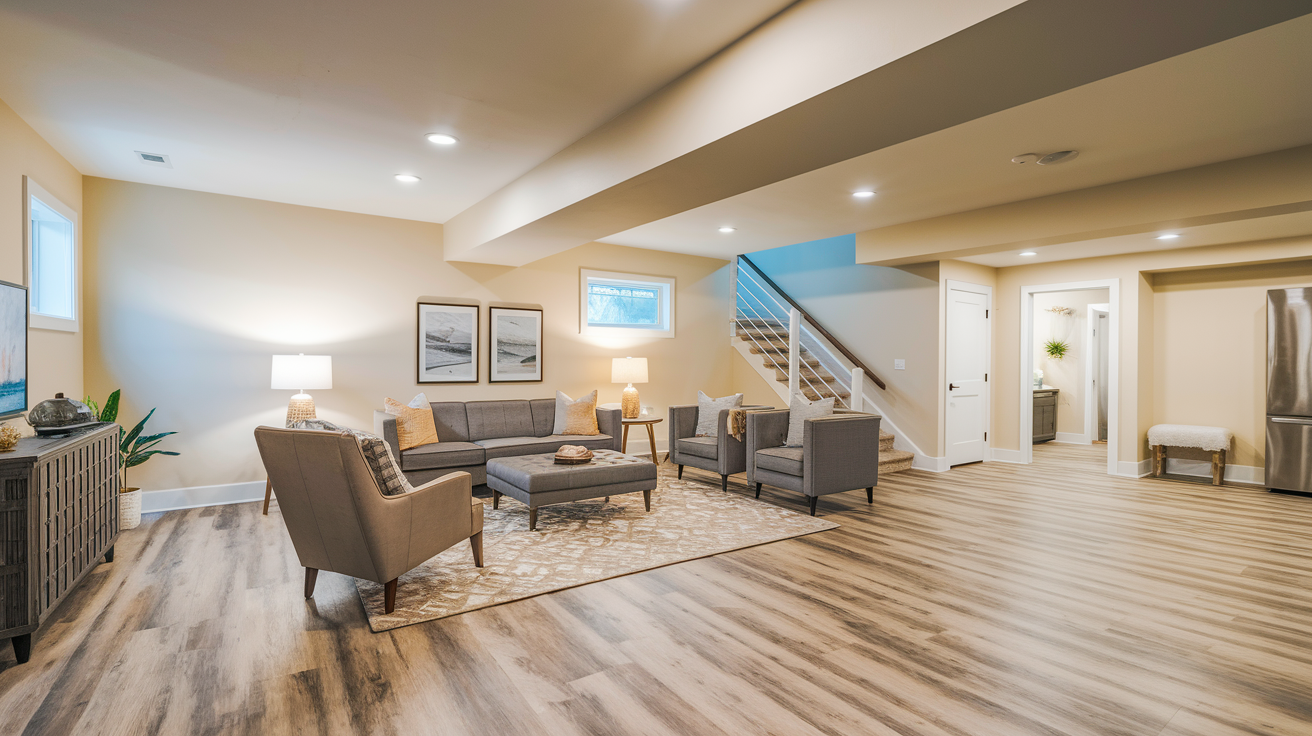
Repeated carpet flooding or homes in high risk areas indicate it’s time to consider more water resistant flooring alternatives. These reduce future damage costs, eliminate health risks from recurring mold exposure, and reduce the stress of repeated water emergencies.
Waterproof options include luxury vinyl plank and luxury vinyl tile. These materials offer wood and tile appearance with 100 percent waterproof construction throughout their thickness. They work well for basements and ground floors. They can handle standing water for extended periods without damage. Typical cost runs $3 to $7 per square foot installed. The completely waterproof core and wear layer mean water can’t penetrate to the subfloor during floods or leaks. Porcelain or ceramic tile provides maximum water resistance. It’s ideal for flood prone areas because it’s impervious to water damage. Higher initial cost at $5 to $15 per square foot installed is offset by decades long lifespan. Proper grout sealing prevents water penetration to the subfloor beneath the tile.
Water resistant alternatives offer partial protection. Engineered hardwood with waterproof core construction resists moisture exposure but can’t handle prolonged submersion. Water sitting on the surface for hours will damage the wood veneer. Laminate with sealed edges and moisture resistant core isn’t waterproof. It fails completely with standing water contact. Polished or epoxy coated concrete works well for basement applications. The surface is completely waterproof. Industrial appearance may not suit all spaces. Cost effectiveness at $3 to $12 per square foot makes it attractive for utility areas, workshops, or modern design preferences.
Practical considerations affect your decision. Transition from carpet to hard surface reduces acoustic cushioning and warmth in living spaces. Area rugs provide comfort zones in specific locations while being easily removed and dried or replaced at low cost after water events. Resale value often improves with durable flooring in flood prone spaces. Buyers recognize reduced maintenance risk and long term cost savings. Radiant heating systems can be integrated with tile or concrete installations to offset warmth loss from carpet removal.
Subfloor Moisture Testing and Acceptable Drying Standards
Moisture meter types serve different purposes. Pin type meters with penetrating probes measure internal moisture content. These are more accurate for wood subfloors but require small pin holes in the surface. Pinless meters use electromagnetic scanning for non invasive surface readings. They work faster for scanning large areas but provide less accuracy than pin meters. Professional grade meters provide precise percentage readings, typically in a 0 to 99 percent range. Consumer models show relative scales with dry, moderate, and wet indicators instead of exact numbers.
Acceptable moisture standards follow industry guidelines. Wood subfloors including plywood, OSB, and solid wood must reach 12 percent moisture content or below before any covering is installed. This follows IICRC S500 standards for water damage restoration. Concrete subfloors should measure below 4.5 percent using a calcium chloride test. Follow specific flooring manufacturer specifications, which often require 3 to 5 pounds per 1,000 square feet per 24 hours maximum emission rate. Baseline moisture readings vary by geographic region and humidity levels. Compare affected areas to unaffected areas of the same structure to establish normal readings. Test at multiple locations including areas that were most saturated, near walls where drying is slowest due to reduced air circulation, and beneath areas where padding was thickest and held the most water.
Testing frequency and documentation protect you from putting things back too early. Measure every 12 to 24 hours during active drying to track progress and verify equipment’s working effectively. Document readings with photos showing the meter display, probe insertion location, and test location markers. Continue drying until three consecutive readings taken 24 hours apart show stable acceptable levels below 12 percent with no upward trends. Retest immediately before any carpet padding or covering installation begins. Keep testing logs as documentation for insurance claims or future reference if problems develop.
| Subfloor Material | Maximum Acceptable Moisture % | Testing Method | Typical Drying Timeline | Replacement Indicator |
|---|---|---|---|---|
| Plywood/OSB | 12% or below | Pin-type meter, multiple locations | 3-7 days with equipment | Delamination, soft spots, readings above 14% after 7 days drying |
| Solid wood planks | 12% or below | Pin-type meter across grain direction | 5-10 days with equipment | Cupping, warping, splitting, persistent readings above 12% |
| Concrete slab | 4.5% or manufacturer spec | Calcium chloride test, 24-hour period | 7-14 days or longer | Efflorescence (white powder), persistent dampness, readings above spec after 14 days |
| Particle board | 10% or below, but often unsalvageable | Pin-type meter, check for swelling | Rarely dries acceptably | Any swelling, crumbling edges, musty odor—usually requires replacement |
Final Words
Padding needs to go no matter what. That part isn’t negotiable.
Whether you should replace carpet or padding after a flood comes down to three things: what kind of water hit it, how fast you acted, and what your nose and moisture meter are telling you now.
Clean water caught in the first few hours gives you a narrow chance at salvage. Anything contaminated, anything past 48 hours, or anything that smells off means replacement is the safer call.
Document everything, test the subfloor, and don’t seal in dampness you can’t see. You’ll save money and stress by doing it right the first time.
FAQ
Q: Should carpet be replaced if flooded?
A: Flooded carpet should be replaced in most situations, especially if the water is contaminated (gray or black water), if the carpet sat wet for over 48 hours, or if the carpet is older than 7-10 years. Clean water floods caught within 6 hours may allow salvage with professional extraction and drying equipment, but padding must always be replaced regardless of water type or timeline.
Q: Does carpet padding need to be replaced after water damage?
A: Carpet padding needs to be replaced after water damage in virtually all flood scenarios because its cellular or fiber structure traps water and contaminants deep within the material where extraction cannot reach. Wet padding loses cushioning properties permanently, harbors bacteria and mold throughout its thickness within 24-48 hours, and retains odors that cannot be removed even after surface drying.
Q: Can mold grow under carpet padding?
A: Mold can grow under carpet padding within 24 to 48 hours of water exposure when moisture, organic material from carpet fibers, and time combine to create ideal conditions for colonization. Padding absorbs water like a sponge and creates breeding grounds for mold and bacteria even when the carpet surface appears dry, making complete padding removal mandatory after flooding.
Q: How long does it take for carpet to mold after a flood?
A: Carpet begins developing mold within 24 to 48 hours after flood exposure when moisture remains trapped in carpet fibers, backing, or padding. This critical 48-hour window determines salvage feasibility because mold spores colonize damp materials rapidly, penetrating deep into fibers and making complete removal impossible without replacement once established.
Q: What water contamination category determines carpet replacement?
A: Water contamination category determines carpet replacement based on health hazards: Category 1 clean water from supply lines may permit salvage with immediate action within 6 hours, Category 2 gray water from appliances requires replacement in most cases, and Category 3 black water from sewage or outdoor flooding mandates immediate complete replacement of both carpet and padding.
Q: How do I know if subfloor damage requires replacement after flooding?
A: Subfloor damage requires replacement when moisture meter readings exceed 12-14% after drying attempts, when soft or spongy areas appear when pressed, when visible mold growth or dark staining is present, when persistent odor remains after complete drying, or when structural warping, board separation, or plywood delamination occurs.
Q: What moisture level is safe for reinstalling carpet after water damage?
A: Safe moisture levels for reinstalling carpet require wood subfloors to reach 12% moisture content or below and concrete subfloors to measure below 4.5% using calcium chloride tests per IICRC S500 standards. Testing should occur at multiple locations with three consecutive stable readings taken 24 hours apart before any padding or carpet installation begins.
Q: Is professional carpet restoration worth the cost compared to replacement?
A: Professional carpet restoration is worth the cost only for newer carpet under 3-5 years old, Category 1 clean water with response within 4-6 hours, and when insurance covers full restoration costs. Replacement typically offers better long-term value for older carpet, contaminated water scenarios, delayed response situations, or when hidden costs like potential mold remediation are considered.
Q: Which carpet fiber types survive flooding better?
A: Synthetic fibers like nylon and polypropylene survive flooding better than natural fibers, with nylon being most resilient to water exposure and polypropylene resisting moisture absorption. Natural fibers like wool and cotton almost always require replacement after significant flooding because they retain up to 30% water weight, shrink 10-15%, and develop rapid mold growth within 24 hours.
Q: What equipment is needed for DIY carpet drying after a flood?
A: DIY carpet drying requires a wet-vac for water extraction, multiple fans positioned to blow under lifted carpet edges, a dehumidifier for continuous moisture removal, wooden blocks or PVC pipe to elevate carpet, and a moisture meter to verify subfloor and carpet backing readings below 12% before reinstallation.
Q: How long should fans and dehumidifiers run after carpet flooding?
A: Fans and dehumidifiers should run continuously for 48-72 hours minimum after carpet flooding, with moisture testing every 12 hours at multiple locations until the subfloor reads below 12% and carpet backing is completely dry. Equipment should operate in a sealed room with windows closed during humid weather for maximum effectiveness.
Q: Does homeowners insurance cover carpet replacement from flooding?
A: Homeowners insurance typically covers carpet replacement from sudden internal water damage like burst pipes, supply line failures, and appliance malfunctions, but excludes natural flooding from rising external water which requires separate flood insurance through NFIP or private carriers. Coverage distinctions significantly affect replacement decisions and claim approval processes.
Q: What are better flooring alternatives for flood-prone basements?
A: Better flooring alternatives for flood-prone basements include luxury vinyl plank or tile with 100% waterproof construction, porcelain or ceramic tile that is impervious to water damage, and polished or epoxy-coated concrete that provides completely waterproof surfaces while eliminating padding moisture traps that carpet creates.
Q: When should I call a professional instead of attempting DIY flood carpet recovery?
A: Call a professional instead of attempting DIY recovery when dealing with Category 2 gray water or Category 3 black water contamination, when the affected area exceeds 10 square feet, when mold odor or visible growth is present, when water sat for over 6 hours, or when proper equipment like industrial fans, dehumidifiers, and moisture meters is unavailable.