
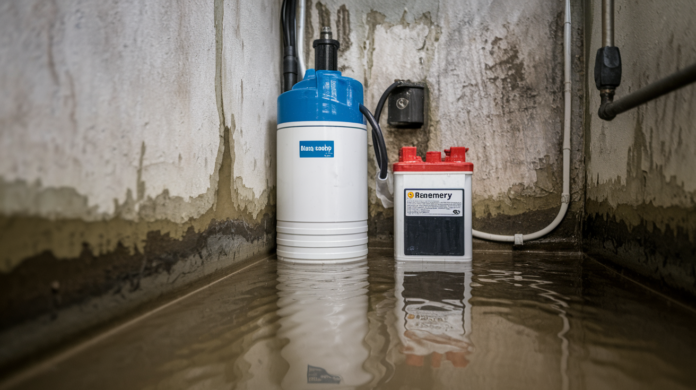
Most homeowners don’t think about sump pump battery backup until the power’s out and water’s rising in their basement. By then, you’re looking at emergency service calls, premium pricing, and no time to shop around. The smart move is understanding what these systems actually cost before you need one, so you can make decisions when you’re calm and dry. A battery backup runs $300 to $3,000 depending on the system you choose and whether you install it yourself or hire a pro. Most people spend $900 to $1,300 for a mid-range setup that keeps their basement dry when the lights go out.
Price Ranges and Total Investment for Battery Backup Systems

Sump pump battery backup systems run anywhere from $300 to $3,000 depending on what you’re buying and who’s installing it. You’re looking at everything from basic DIY setups with entry level batteries all the way up to fully installed premium systems with monitoring you can check from your phone. Most homeowners land somewhere between $900 and $1,300 for a professionally installed mid tier system. That’s the sweet spot where you get reliability without emptying your wallet.
Adding battery backup to your existing sump pump costs less than replacing everything. If your current pump still works fine, you’re mainly paying for the backup components and someone’s time to hook it up. Retrofitting typically runs $300 to $1,500 for parts and professional installation. Installing a complete new primary pump plus battery backup system pushes you toward the higher end, often $1,500 to $3,000 total.
| System Tier | Price Range (Installed) | Key Features |
|---|---|---|
| Basic | $600–$800 | Lead-acid battery, basic pump, manual testing, 5-8 hour runtime |
| Mid-Range | $900–$1,300 | AGM battery, audible alarm, automatic charger, 8-12 hour runtime |
| High-End | $1,500–$2,500+ | Lithium-ion battery, Wi-Fi alerts, remote monitoring, 12+ hour runtime |
Where you live affects what you’ll pay. Labor rates for plumbers and electricians range from $75 to $150 per hour in cities, with rural areas typically charging less. Coastal regions and hurricane prone areas see 15 to 25 percent higher prices because demand stays high and contractors know these systems aren’t optional for homeowners. Regional differences show up in equipment availability too. Some battery types and pump brands cost more in areas where they’re not commonly stocked. If you’re in a flood prone zone, expect to pay toward the higher end of every range.
Battery and Component Costs by Type

A battery backup system breaks down into four main parts: the backup pump itself, the battery powering it, the charger keeping the battery ready, and the control panel switching everything on when needed.
The backup pump unit typically costs $100 to $500 depending on capacity and brand. Pumps rated for 1,000 gallons per hour sit at the lower end, while models capable of moving 2,200 gallons per hour cost more. Most backup pumps run on DC power directly from the battery, which makes them more efficient than trying to power your regular AC pump through an inverter.
The accessories and control components add up quickly. Charging controllers managing battery health run $50 to $200. Battery boxes or housings protecting the battery and containing any potential leaks cost $30 to $100. Alarm systems alerting you when the backup activates or when battery levels drop range from $25 to $150. Cables, connectors, and mounting hardware typically add another $20 to $75. These components affect reliability as much as the pump and battery do. Cheap chargers can shorten battery life, and skipping an alarm means you might not know your backup ran until you discover a dead battery.
Three battery technologies dominate the market, each with different cost structures.
Lead-acid batteries cost $150 to $600, last 3 to 5 years, require no maintenance, charge slowly (8 to 12 hours), weigh 40 to 60 pounds, and handle moderate discharge cycles before performance drops.
AGM (Absorbed Glass Mat) batteries cost $200 to $800, last 5 to 7 years, tolerate deeper discharges without damage, charge faster than lead-acid (6 to 8 hours), weigh 50 to 70 pounds, and deliver more consistent power through their lifespan.
Lithium-ion batteries cost $800 to $2,000, last approximately 10 years, charge fastest (2 to 4 hours), weigh half as much as lead-acid (20 to 30 pounds), handle hundreds more charge cycles, and maintain performance even when discharged to 20 percent capacity.
Maintenance requirements differ dramatically. Lead-acid and AGM need no attention beyond keeping connections clean, while lithium systems include sophisticated battery management preventing damage from overcharging or deep discharge. Cold weather performance varies too. Lithium batteries lose 20 percent capacity below freezing, while AGM batteries perform better in unheated basements but weigh significantly more.
Over a 10 year period, you’ll replace a lead-acid battery 2 to 3 times at $150 to $600 each, totaling $300 to $1,800 in battery costs. AGM batteries need replacement 1 to 2 times in the same period, running $200 to $1,600 total. A single lithium battery might last the full 10 years at $800 to $2,000 upfront. For most basements with moderate flooding risk, AGM batteries offer the best balance. You get 5 to 7 years between replacements without the high upfront cost of lithium. If your basement floods frequently or you need maximum runtime, lithium’s longer lifespan and better efficiency justify the price. Budget conscious homeowners in low risk areas can start with lead-acid and upgrade later. Battery prices creep up 3 to 5 percent annually, so buying sooner rather than later saves a bit.
Installation Options and Associated Costs

You have two paths: hire a professional or install the system yourself.
Professional installation adds $300 to $750 to your project cost on average, though complex jobs can push that to $1,500. Contractors charge $75 to $150 per hour in urban areas, with rural rates running lower. A straightforward installation where the backup pump drops into your existing sump basin and connects to dedicated electrical circuits takes 2 to 4 hours for a skilled plumber or electrician. Costs climb when you’re dealing with tight crawl spaces, basins needing modification, homes without a nearby GFCI outlet, or situations requiring new discharge piping. Plumbing modifications and electrical circuit additions can add $100 to $500 to the labor bill.
Call a professional when your setup involves running new electrical circuits, modifying discharge plumbing, or if your basement has complex access issues. DIY makes sense when you’re adding a simple DC backup pump to an existing basin that already has proper drainage and you’ve got a nearby outlet. Most existing sump pumps work with battery backup through two approaches: you can add a separate DC powered backup pump sitting alongside your primary pump, or you can install an inverter system powering your existing AC pump from the battery.
Installing it yourself saves the $300 to $750 in labor charges.
- Shut off power to the sump pump circuit at your panel and verify it’s off with a voltage tester
- Position the backup pump in the basin next to your primary pump, typically mounting it slightly higher so both pumps don’t run simultaneously
- Connect the backup pump’s discharge pipe to your existing discharge line using a check valve to prevent backflow
- Mount the battery and control unit on the wall near the sump basin, keeping everything at least 6 inches off the floor
- Wire the battery to the charger and control panel according to manufacturer diagrams, then connect the backup pump to the battery terminals
- Restore power, let the battery charge fully (8 to 24 hours), then test the system by unplugging your primary pump and adding water to the basin
Shop for systems during late summer or early fall when demand drops and retailers clear inventory. Get quotes from at least three contractors before spring storms hit. Prices jump when everyone suddenly needs installation. Some utility companies and municipalities offer rebate programs for flood prevention equipment, potentially saving $50 to $200. Ask contractors about package pricing if you’re also getting other basement waterproofing work done. But never skip proper electrical work to save money. Backup systems that aren’t wired correctly can fail when you need them or create safety hazards around water.
Factors That Influence Your Total System Cost
Several variables push your final bill up or down beyond the base equipment prices.
Pump capacity requirements matter. Homes with high water tables or large basements need pumps rated for 2,200 gallons per hour or more, costing significantly more than 1,000 GPH models suitable for average conditions.
Horsepower rating affects cost too. A 3/4 HP pump draws more battery power than a 1/3 HP pump, requiring larger, more expensive batteries to achieve the same runtime.
Installation complexity plays a role. Difficult basement access, the need to run new discharge pipes, or electrical panel upgrades all increase labor hours and material costs.
Water table height drives battery requirements. If groundwater sits high and your pump cycles frequently, you need larger battery capacity to handle extended outages.
Existing system compatibility can add costs. Some older sump basins are too small for dual pumps, requiring basin replacement that adds several hundred dollars.
Battery capacity requirements get determined by how much power your pump draws and how many hours of protection you want during outages.
Pump horsepower directly determines battery size and cost. A 1/3 HP pump typically draws 7 to 9 amps when running, while a 3/4 HP pump pulls 13 to 15 amps. To calculate minimum battery capacity, multiply your pump’s amperage by the number of hours you want the system to run, then add a 20 percent safety margin. A 1/3 HP pump drawing 8 amps that you want to run for 6 hours needs a battery rated for at least 58 amp hours (8 amps × 6 hours × 1.2). Pumps cycle on and off rather than running continuously, so real world runtime extends beyond the math. That 58 amp hour battery might give you 10 to 12 hours of protection if the pump only runs 40 percent of the time.
Homes with high water tables face higher costs because the pump runs more frequently during outages. If groundwater sits 2 feet below your basement floor instead of 6 feet down, your pump might cycle every 10 minutes instead of every 30 minutes during heavy rain. That means you need a battery with three times the capacity to make it through the same length power outage, pushing you toward premium AGM or lithium batteries. Complex installations add cost too. If your existing discharge pipe runs through a finished wall or your sump basin sits in a tight corner with poor access, expect labor charges at the higher end of the range. Retrofitting a backup system to an existing setup is almost always cheaper than starting from scratch, assuming your current basin size and discharge plumbing can accommodate a second pump.
Runtime Duration and Capacity Considerations

Runtime matters because power outages during severe storms can last anywhere from a few hours to several days.
How much power your pump draws determines how long any battery will keep it running. A 1/3 HP pump is the most common residential size and uses significantly less power than a 3/4 HP pump. That difference directly affects which battery you need. A mid size battery giving you 8 hours of protection with a 1/3 HP pump might only deliver 4 hours with a 3/4 HP model.
Calculate required battery capacity by multiplying your pump’s amp draw by the hours of protection you want, then adding a 20 percent safety buffer. For a 1/3 HP pump drawing 8 amps, a 6 hour target needs at least a 58 amp hour battery (8 × 6 × 1.2). Most manufacturers list pump amperage on the nameplate or in documentation. If you can’t find it, measure the current draw with a clamp meter while the pump runs under load.
A standard 1/3 HP pump running on a mid range AGM battery typically delivers 3 to 5 hours of continuous operation, but pumps don’t run continuously. They cycle on when water reaches the float switch, pump the basin down, then shut off until water rises again. During typical rainfall, that cycling pattern might mean the pump only runs 30 to 40 percent of the time, extending your effective runtime to 8 to 12 hours on the same battery. Heavy rain with a high water table reduces those rest periods and drains the battery faster.
Additional Installation and Permit Expenses

Costs beyond the pump, battery, and basic installation labor can surprise you if you’re not expecting them.
Building permits and electrical inspections add $50 to $200 to your total depending on where you live. Some municipalities require permits for any electrical work involving new circuits or for plumbing modifications to discharge systems. Local code requirements vary. Certain jurisdictions mandate specific types of battery backup systems, dedicated circuits, or particular discharge pipe configurations that affect what you can install. Call your local building department before buying equipment to confirm what’s required in your area.
Your basement might need electrical circuit upgrades if there’s no dedicated GFCI protected outlet near the sump basin. Running a new circuit from your panel costs $100 to $300 depending on distance and wall access. Some backup systems require 20 amp circuits instead of standard 15 amp circuits, potentially requiring panel upgrades if you’re out of breaker spaces. Plumbing modifications become necessary when your existing discharge pipe can’t accommodate a second pump or when check valves need replacement to prevent backflow from damaging the battery backup pump. Those plumbing changes typically run $100 to $500 for materials and labor in situations where pipes run through finished walls or need rerouting. Removing and disposing of old, failed equipment adds another $50 to $150 if you’re replacing an existing backup system. Not every installation hits these additional costs. Adding a simple backup pump to an easily accessible basin with nearby electrical service often avoids them entirely.
Ongoing Maintenance and Operating Expenses

The initial purchase price is just the start of what you’ll spend over the system’s lifetime.
Annual maintenance including professional inspection and testing runs $75 to $150, covering checking battery charge, testing pump operation, cleaning the basin, and verifying alarm function. Electricity costs for keeping the battery charged add $10 to $30 yearly to your electric bill, a small price for continuous protection. Repair costs when components fail typically run $50 to $300 depending on what breaks. Float switches, chargers, and control boards are common repair items. Battery replacement every 3 to 10 years (depending on type) costs $100 to $800 for the battery itself plus potential labor if you’re not handling it yourself.
Professional annual inspections catch problems before they cause failures. Technicians verify the battery holds a full charge, test that the backup pump activates properly, check all electrical connections for corrosion, inspect the discharge pipe for blockages, and confirm alarm systems work. Many homeowners skip this until something fails, then discover the backup didn’t work when they needed it. Testing your system yourself every few months (pouring water in the basin with the primary pump unplugged) helps too, but professionals spot issues like declining battery capacity or weakening pump performance that aren’t obvious during basic tests.
Calculate total 10 year ownership for different battery types to understand real costs. A lead-acid system might cost $800 installed initially, then $150 for battery replacements in years 4 and 8, plus $100 yearly for professional maintenance, totaling around $2,100 over a decade. An AGM system at $1,100 installed needs one $300 battery replacement around year 6, with the same annual maintenance, totaling about $2,400 over 10 years. A lithium system at $1,800 installed might need no battery replacement in 10 years with the same annual maintenance, totaling $2,800. The lithium system costs more upfront but requires the least attention and offers the most reliable performance throughout its life.
Brand Comparison and Model Pricing Examples

Brand reputation, warranty coverage, and build quality separate budget options from premium systems, and those differences show up in both initial pricing and long term reliability.
| Brand/Model Type | Price Range | Warranty | Key Features |
|---|---|---|---|
| Budget Pedestal Backup | $300–$500 | 1 year | Basic lead-acid battery, manual float switch, above-basin mounting, requires more maintenance |
| Mid-Range Submersible | $700–$1,100 | 2-3 years | AGM battery, automatic operation, audible alarm, sits below water level for quieter operation |
| Premium Submersible with Monitoring | $1,400–$2,000 | 3-5 years | Lithium battery option, Wi-Fi connectivity, smartphone alerts, runtime tracking, automatic charger diagnostics |
| Commercial-Grade Dual-Pump System | $2,000–$2,800 | 5 years | Two backup pumps, oversized lithium battery, handles high water tables, extended runtime up to 30+ hours |
| Combination AC/DC System | $1,200–$1,800 | 3 years | Powers existing AC pump via inverter, no secondary pump needed, AGM battery, works with current setup |
Submersible pumps cost more than pedestal models but they’re worth it for most installations. They sit underwater in the basin where they stay cooler, run quieter, and last longer because they’re not exposed to humid basement air. Pedestal pumps mount above the basin on a stand, making battery and component access easier but they’re noisier and more prone to motor problems from moisture exposure. Warranty length tells you something about build quality too. Budget systems with 1 year coverage often use cheaper components that manufacturers expect to fail sooner. Premium systems backed by 3 to 5 year warranties typically include better motors, more robust float switches, and superior control electronics. Having backup systems as part of your overall home emergency planning means thinking beyond just the sump pump. Knowing where your main water shutoffs are and how to respond quickly when problems start prevents backup systems from getting overwhelmed in the first place.
Water-Powered and Combination Backup Alternatives
Traditional battery backup systems aren’t your only option for sump pump protection during power outages.
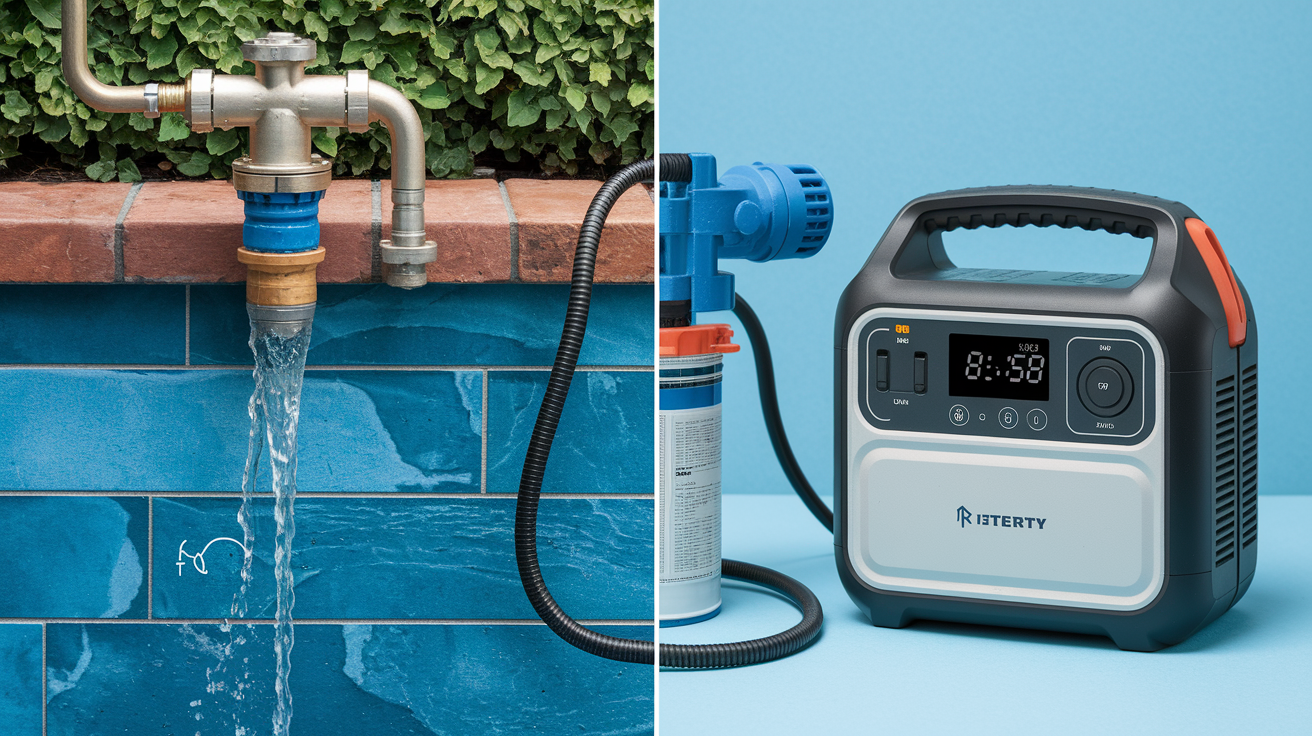
Water powered backup pumps use your home’s municipal water pressure to create suction that removes water from your sump basin. No battery, no electricity, no charging to maintain. These systems cost $400 to $900 installed and work as long as you have city water pressure. They connect to a cold water line, use the Venturi effect to create vacuum pressure, and discharge through your existing sump discharge pipe. The catch is they only work if you have municipal water at adequate pressure (minimum 40 to 60 PSI), they use 1 gallon of city water for every 2 gallons they remove from your basin (increasing your water bill during outages), and most local codes require a backflow preventer installation adding $100 to $200 to the project.
Portable power stations offer flexible backup without permanent installation. Units like the EcoFlow DELTA 3 Classic cost $500 to $3,000 depending on capacity, deliver 1024Wh of stored energy with 1800W output, and simply plug into your pump when power fails. No wiring, no dedicated installation. A mid range portable station runs a standard 1/3 HP sump pump for 3 to 5 hours of continuous operation, with typical cycling extending that to 8 to 12 hours. The advantage is you can use the same power station for other emergencies (refrigerators during outages, power tools, camping). Solar panels can recharge these stations during extended outages, potentially giving you days of protection if you have enough sunlight between storms. The downside is someone needs to be home to plug the pump in when power fails, and you need to keep the battery charged year round.
Water powered systems make sense for homes with strong municipal water pressure who want maintenance free protection and don’t mind higher water bills during the occasional outage. Portable power stations work well for homeowners who want flexibility, already own or plan to use the station for multiple purposes, and are usually home during storms. Traditional battery backup systems remain the best choice when you need automatic operation, live in areas with weak water pressure, or face frequent extended outages where water powered systems become expensive to operate.
Cost Versus Benefit Analysis and Protection Value

A $300 to $3,000 investment in battery backup protection looks different when you compare it to the $25,000 average cost of repairing a flooded basement. Water damage compounds fast. One inch of standing water across a 1,000 square foot basement ruins flooring, baseboards, drywall, insulation, and anything stored on the floor, easily hitting $8,000 to $15,000 in restoration costs. Add mold remediation if water sits for more than 48 hours and you’re looking at another $2,000 to $10,000. Structural damage to foundation walls from hydrostatic pressure or repeated flooding pushes total costs even higher. Most sump pump failures happen during storms when power outages are most likely, which means your pump quits exactly when you need it most.
Insurance considerations shift the math too. Many homeowners discover their standard policies don’t cover flooding caused by mechanical failure. Insurance companies consider a failed sump pump a maintenance issue, not a covered loss. Even policies providing some coverage often come with deductibles of $1,000 to $2,500, leaving you covering significant damage costs. On the flip side, insurance companies in flood prone areas offer premium discounts of 5 to 10 percent for homes with documented backup systems, potentially saving $50 to $150 annually on policies. That discount adds up over time, effectively covering your annual maintenance costs and reducing the system’s net cost.
Property value gets a boost too. Home buyers in areas with any flood history specifically ask about sump pump backup systems during inspections, and homes with quality backup systems sell faster and for slightly more than comparable homes without them.
You break even after preventing a single flood event. A mid range $1,200 battery backup system that prevents one basement flood saves you $23,800 compared to the $25,000 repair bill. Put another way, the system needs to work exactly once in its 10 year battery life to justify every dollar spent. Most basements with sump pumps experience power outages during storms every few years, meaning your backup likely activates multiple times over its life. Battery backups fit into comprehensive basement protection alongside proper grading, gutter maintenance, and interior drainage systems. They’re not the only defense, but they’re the last line that prevents disaster when everything else gets overwhelmed.
Getting Accurate Quotes and Timing Your Purchase
Start by getting at least three detailed written quotes from licensed contractors before committing to any installation.
When talking to contractors, ask how many battery backup systems they’ve installed in the past year, what brands they recommend and why, whether the quote includes all materials and disposal fees, what warranty they provide on labor, and how long the installation will take from start to finish. Get everything in writing. Vague verbal estimates turn into surprise charges later. Red flags include contractors who push you to decide immediately, quotes that come in 40 percent or more below other estimates (often indicating they’re cutting corners or will add charges later), reluctance to pull required permits, or inability to provide recent references from similar installations. Established contractors provide detailed breakdowns showing equipment costs separate from labor, explain what’s included and what’s not, and give realistic timelines.
Seasonal pricing fluctuations are real. Demand for sump pump installations peaks in early spring when homeowners panic about snowmelt and spring storms, and again in fall when people prepare for winter. Buy and schedule installation during late summer (July through August) when demand drops and contractors offer better rates to fill schedules. Equipment retailers clear inventory in late summer too, potentially saving 10 to 20 percent on the same battery backup system that costs more in March.
Check for rebate programs through your local utility company, municipal water department, or regional flood control district. Some offer $50 to $300 back for installing qualifying backup systems. A few insurance companies provide upfront discounts or rebates for policyholders who add documented backup systems. Financing options exist through home improvement lenders and some contractors offer payment plans for installations over $1,500, though interest charges add to total cost. Compare the financing terms carefully. A 12 month zero interest promotion beats a 3 year loan at 8.9 percent if you can pay it off before interest kicks in. Beyond price, compare what contractors include: does the quote cover testing and adjusting the system after installation, are they licensed and insured for both plumbing and electrical work, will they handle permit applications, and do they offer any maintenance packages or service contracts for the system after installation?
Final Words
A sump pump battery backup cost between $300 and $3,000 protects your basement from floods that typically cause $25,000 in damage.
The right system depends on your pump size, water table, and how long you need protection during outages.
Get three quotes, ask about warranties, and factor in battery replacements every few years. Most homeowners spend $900 to $1,300 for a mid-range system that handles typical storm outages.
One prevented flood pays for the entire investment. Start with quotes now, before the next storm hits and installers get backlogged.
FAQ
Q: Are sump pump battery backups worth the investment?
A: Sump pump battery backups are worth the investment because they cost $300-$3,000 but prevent an average $25,000 in flood damage. Most pump failures happen during storms when power outages are likely, and one backup can protect your basement for years while potentially earning you insurance discounts.
Q: Can I add battery backup to an existing sump pump system?
A: You can add battery backup to an existing sump pump through two methods: installing a separate DC backup pump or adding an inverter system for your current pump. Adding backup to existing systems costs less than replacing everything simultaneously, typically saving $200-$500 compared to complete replacement.
Q: How much does a backup sump pump battery cost?
A: A backup sump pump battery costs $150-$2,000 depending on type. Lead-acid batteries run $150-$600, AGM batteries cost $200-$800, and lithium-ion batteries range from $800-$2,000. Battery lifespan varies from 3-5 years for lead-acid to 10 years for lithium, affecting long-term replacement costs.
Q: How long will a backup battery last on a sump pump during power outages?
A: A backup battery lasts 5-53 hours on a sump pump depending on battery capacity and pump power draw. A standard 1/3 HP pump runs 3-5 hours on mid-range batteries with typical cycling, while larger batteries or lower-power pumps provide longer protection during extended outages.
Q: What is the total installed cost for a battery backup system?
A: The total installed cost for a battery backup system ranges from $600-$2,500 for most homeowners. Basic systems cost $600-$800 installed, mid-range systems run $900-$1,300, and high-end systems with monitoring reach $1,500-$2,500. Professional installation adds $300-$750 to equipment costs.
Q: How much does professional installation cost for sump pump battery backup?
A: Professional installation costs $300-$750 in labor fees for battery backup systems. Plumbers and electricians charge $75-$150 per hour in cities with lower rates in rural areas. Installation typically takes 2-4 hours, but complex plumbing or difficult crawl space access adds $100-$500.
Q: What factors increase the cost of battery backup systems?
A: Factors that increase battery backup costs include higher pump capacity (2,200 GPH versus 1,000 GPH), greater horsepower rating (3/4 HP versus 1/3 HP), complex installation access, high water tables requiring larger batteries, and coastal or hurricane-prone locations with 15-25% price premiums.
Q: What ongoing maintenance costs should I expect for battery backup systems?
A: Ongoing maintenance costs include $75-$150 for annual professional inspections, $10-$30 yearly in electricity for charging, $50-$300 for occasional repairs, and battery replacements every 3-10 years costing $100-$2,000 depending on type. Total 10-year ownership costs vary significantly by battery choice.
Q: Do I need permits for sump pump battery backup installation?
A: Permits and inspections for battery backup installation typically add $50-$200 to project costs depending on your jurisdiction. Some locations require permits for electrical work or plumbing modifications, while others don’t regulate battery backup additions. Check local code requirements before starting installation.
Q: Can I install a battery backup system myself to save money?
A: You can install a battery backup system yourself and save $300-$750 in professional labor costs. DIY installation requires basic electrical and plumbing knowledge, proper tools, and typically takes 4-6 hours. However, complex installations or homes requiring electrical upgrades should use licensed professionals for safety.
Q: How do regional differences affect battery backup pricing?
A: Regional differences affect pricing through labor rates ($75-$150 per hour in cities versus lower rural rates), coastal areas seeing 15-25% higher prices from hurricane demand, and equipment availability varying by location. Hurricane-prone regions maintain higher baseline prices year-round.
Q: What rebates or incentives are available for battery backup systems?
A: Rebates and incentives include utility company programs for backup power systems, insurance premium discounts of 5-10% for homes with battery backups, and seasonal manufacturer rebates during off-peak months. Check with your local utility provider and insurance company for available programs.
Q: How much does a water-powered backup pump cost compared to battery systems?
A: Water-powered backup pumps cost $400-$900, making them less expensive than most battery systems. They require no battery maintenance or electricity but depend on municipal water pressure. Battery systems cost $600-$2,500 installed but work independently of water supply.
Q: What is the cost difference between submersible and pedestal backup pumps?
A: Submersible backup pumps cost more than pedestal models but offer better performance and durability. Budget pedestal pumps start around $100-$200, while submersible models range from $200-$500. Submersible pumps handle higher water volumes and last longer despite higher initial costs.
Q: How do I calculate the required battery capacity for my pump?
A: Calculate required battery capacity by multiplying your pump’s amperage by desired runtime hours, then add 20% as a safety margin. A 1/3 HP pump drawing 5 amps needing 8 hours protection requires approximately 48 amp-hours plus 20%, totaling roughly 58 amp-hours minimum capacity.