

You don’t get a second chance at water damaged carpet removal. Miss a critical tool and you’re either losing hours running to the store while moisture soaks deeper, or you’re stuck improvising with equipment that wasn’t built for the job. Worse, you might skip steps entirely because you don’t have what you need right when the clock is ticking toward that 48 hour mold deadline. This checklist covers every extraction, removal, drying, and safety tool you actually need before you start pulling wet carpet, organized by job phase so you’re not guessing what comes next.
Complete Tool Checklist for Flooded Carpet Removal
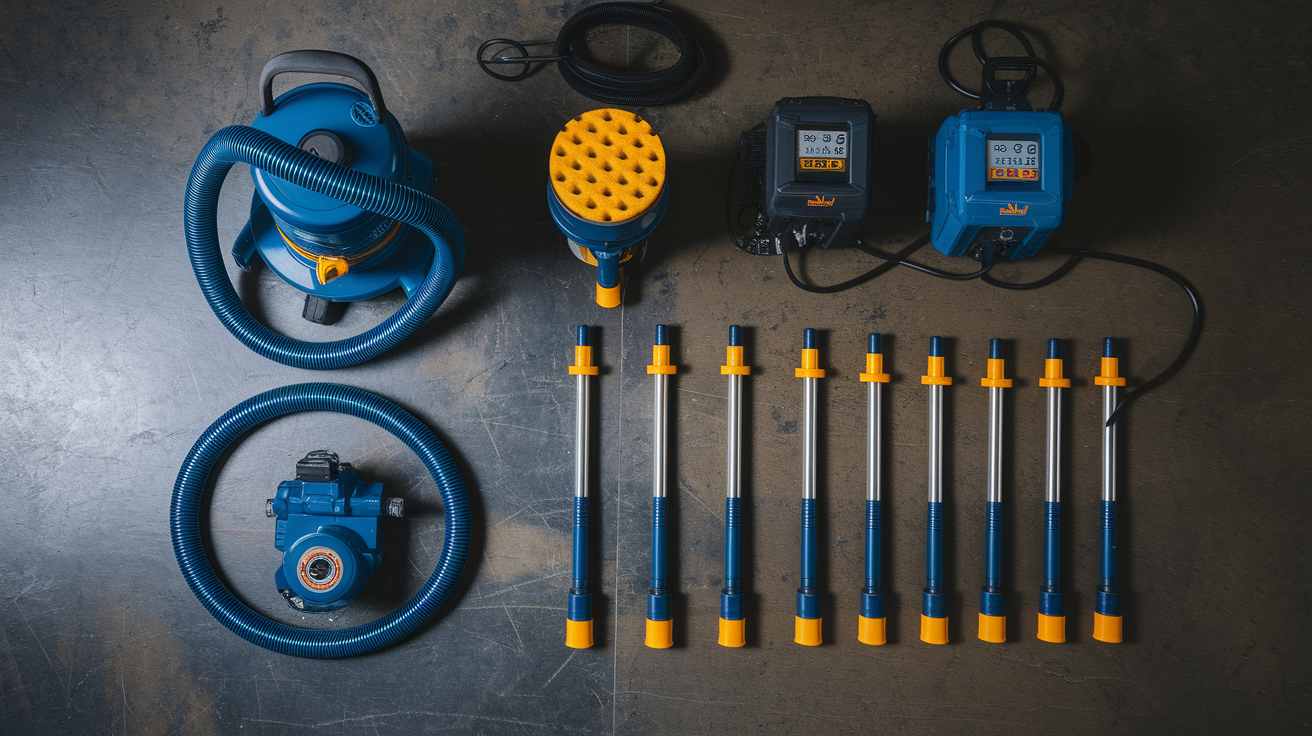
Getting the right tools together before you start matters more than you think. Once you’re dealing with standing water and soaked carpet, you’ve got 48 hours to prevent mold growth, and running to the hardware store halfway through the job burns precious time you don’t have.
Water Extraction Tools
Shop vac with a sponge-type filter is your first line of defense for water extraction. Never use a regular household vacuum for this job. They’re not built for liquids and you’ll wreck the motor instantly. Paper filters disintegrate when wet, so always use sponge filters designed for wet pickup.
The technique is straightforward. Start with your largest vacuum attachment and work down to smaller sizes as you extract water. Push each attachment down firmly against the carpet to pull moisture from deep in the fibers and padding. You’re not just skimming the surface.
For basement flooding or any standing water over 2 inches deep, a submersible pump comes before the shop vac. These pumps move water measured in gallons per hour. A basic model handles 1,500 to 3,000 gallons per hour, which matters when you’re looking at several inches across a whole basement. The pump clears bulk water fast so your shop vac can focus on extraction instead of moving lakes around.
Extraction wands with narrow heads reach corners and edges where standard attachments can’t fit. Tight spots against baseboards hold more water than you’d guess.
Here’s the extraction sequence that prevents wasted effort:
- Remove all furniture, area rugs, and anything sitting on wet carpet
- Use a submersible pump first if standing water exceeds 2 inches anywhere in the affected area
- Extract remaining water with wet vacuum, progressing through attachment sizes from large to small
- Take moisture meter readings across the entire area to verify you’ve pulled all extractable water
Carpet and Padding Removal Tools
A sharp utility knife or carpet knife cuts flooded carpet into manageable strips about 3 feet wide. Dull blades drag and tear instead of cutting clean, and you risk gouging the subfloor underneath. Keep extra blades handy.
Carpet must be peeled back at the corner to expose the underlying pad, which absorbs significant water and won’t dry unless you expose it to airflow. Start at any corner and pull firmly. You’ll hear crackling or popping sounds as the carpet releases from tack strips around the room perimeter. That’s normal. Those are the tack strip teeth letting go.
A pry bar and tack strip puller release stubborn sections where carpet stays bound to strips. Work the pry bar under the carpet edge and lift gradually. Forcing it damages the subfloor.
Pliers give you a solid grip on carpet edges, especially when the material is heavy with water and hard to grab. A hammer loosens tack strips that won’t budge, though you’re usually pulling carpet off strips rather than removing the strips themselves unless they’re rusted or damaged.
A flooring scraper removes stuck padding residue after you’ve pulled the main padding up. Wet padding breaks apart and leaves a layer of material glued to the subfloor. Scraping takes time, but leaving it there invites mold.
Drying and Moisture Detection Equipment
Dehumidifiers pull moisture from the air after you’ve extracted standing water. Residential units range from 30 to 70 pints per day capacity. Bigger rooms or severe flooding need higher capacity. Position dehumidifiers to blow dry air directly across wet surfaces, not just into the middle of the room.
Most units have a bucket you empty every few hours, but continuous drain options let you run them overnight without babysitting. Connect a hose that drains into a floor drain or sump pit.
Air movers and industrial fans measure airflow in CFM (cubic feet per minute). Higher CFM ratings mean faster drying. Position fans at least 3 feet away from any surface when you’re combining them with portable heaters. Closer than that creates a fire hazard.
Heat accelerates drying because warm air holds more water than cold air. Run fans on high for at least 24 hours minimum even after the surface feels dry. Moisture lingers in padding and subfloor long after the top layer seems fine.
Humid outdoor conditions slow everything down. Air that’s already saturated can’t absorb much more moisture. Close windows during humid weather and let dehumidifiers do the work. Open windows when it’s dry outside.
Moisture meters tell you what’s actually happening below the surface. For wood subfloors, acceptable moisture content runs 12 to 15 percent. For concrete, you want a reading under 4 on the meter’s moisture scale. Take multiple readings across the affected area, not just one spot. Document the numbers for insurance and to track drying progress.
Wood that reads 20 percent moisture still needs more drying time. Concrete above 4 isn’t ready for new flooring.
Safety and Protective Equipment
Water category determines what protection you need. Clean water from a broken supply line is category 1. Gray water from a washing machine discharge or dishwasher overflow is category 2. Black water from sewage backup or outdoor flooding is category 3, grossly unsanitary with bacteria.
Category 3 contamination requires professional water damage specialists. If the water came from outside or from any drain or sewer line, stop and call a pro. The health risks aren’t worth saving the service call cost.
For category 1 and 2 water that you’re handling yourself, here’s what you need:
An N95 or N100 respirator mask filters out mold spores and airborne contaminants. If you see visible mold or smell mildew, upgrade to N100. Standard dust masks don’t cut it.
Heavy duty rubber gloves that reach past your elbows protect against contaminated water and sharp tack strips. Kitchen gloves are too short and too thin.
Safety goggles or a face shield keep splashes and debris out of your eyes when you’re cutting carpet or scraping padding. Water extraction kicks up more spray than you expect.
Rubber boots with non-slip soles matter when you’re walking on wet surfaces and kneeling on damp subfloor for extended periods. Regular shoes soak through in minutes.
Knee pads save your knees during hours of floor level work pulling carpet and scraping padding. Cheap foam pads are better than nothing, but gel filled or hard shell pads with straps work better for long sessions.
Disposable coveralls make sense for category 3 water or any situation with visible mold. You bag and throw them out with contaminated materials instead of tracking contamination through your house.
Get your tools together before you start pulling carpet or firing up equipment. Have at least 20 heavy duty garbage bags ready. These need to be 3 mil contractor grade bags, not kitchen trash bags. Wet padding and carpet weigh more than regular trash bags can handle, and you don’t want them splitting open.
For expensive items like commercial extractors and industrial dehumidifiers, renting makes more sense than buying for most homeowners dealing with a one time flood. You’ll spend $40 to $80 per day on rentals versus $300 to $800 to purchase equipment you’ll use once and store for years.
Disinfection and Mold Prevention Tools for Flooded Areas

Mold colonization starts within 48 hours of initial water exposure. Once that window closes, you’re fighting mold growth instead of preventing it.
Antimicrobial sprays and disinfectant solutions treat subfloors, baseboards, and wall surfaces after water extraction. Use EPA registered products designed for flood remediation, not household cleaners. These products need specific contact time to work, usually 10 minutes of wet surface time before wiping or allowing to air dry. Treat everything up to 2 feet from the floor level, even if it looks dry, because wicking carries moisture higher than visible water lines show.
| Product Type | Purpose | Application Timing |
|---|---|---|
| Antimicrobial spray | Treats exposed subfloor to prevent mold colonization | After carpet removal, before drying equipment starts |
| Disinfectant solution | Sanitizes category 2 to 3 contaminated surfaces | Immediately after water extraction, reapply after 24 hours |
| Baking soda | Absorbs odors and lifts remaining moisture from materials | Sprinkle and let sit 30 minutes before vacuuming during drying phase |
| HEPA air scrubber | Captures airborne mold spores during removal and drying | Run continuously throughout entire project |
| Enzymatic cleaner | Breaks down organic contamination from sewage or outdoor water | After disinfection on category 2 to 3 water damage only |
When odor persists despite cleaning and drying, you’ve got hidden moisture or contamination you haven’t reached yet. That smell is often the first warning sign of mold growing inside wall cavities or under remaining flooring materials. HEPA filtration during the drying process captures airborne spores before they resettle and colonize new areas. Standard fans just blow spores around the room.
Supporting Supplies and Equipment for Carpet Removal Projects

These unglamorous but essential supplies make the difference between a smooth project and constant frustration.
Heavy duty extension cords rated for 12 gauge minimum handle multiple fans and dehumidifiers running simultaneously without overheating or tripping breakers. Power strips with surge protection let you plug in several pieces of drying equipment from one outlet location. Large buckets, the 5 gallon size, carry debris, hold dirty water from extraction, and serve as a place to wring out saturated towels.
Absorbent towels in quantity, at least 20, for the stepping method where you walk on towels pressed against carpet to force water from padding. A mop and bucket for final floor cleaning after carpet and padding removal exposes dirty subfloor. Heavy mil plastic tarps protect dry adjacent rooms and hallways from tracked moisture and debris.
Contractor grade garbage bags with 3 mil thickness hold wet padding and carpet without splitting from the weight. Spray bottles for applying disinfectant solution in controlled amounts. Portable generator if flooding has compromised electrical service or if you need to run equipment in areas without accessible outlets.
Keep everything organized in a staging area near your work zone. Absorption materials like towels and baking soda deplete faster than you expect when you’re dealing with significant water volume. Having extras on hand prevents mid project supply runs that eat into your 48 hour window.
Rental Equipment vs. Purchasing Tools for Carpet Removal
Most homeowners don’t own commercial extraction equipment, and that’s fine. Renting is usually smarter than buying.
| Tool | Typical Rental Cost | Purchase Cost | Best Choice |
|---|---|---|---|
| Commercial carpet extractor | $40 to $60 per day | $300 to $800 | Rent for one time use |
| Industrial dehumidifier | $50 to $80 per day | $250 to $600 | Rent unless you live in flood prone area |
| Air mover | $25 to $40 per day | $150 to $300 | Rent for single event |
| Moisture meter | $15 to $25 per day | $30 to $150 | Purchase for verification and future use |
| Submersible pump | $30 to $50 per day | $100 to $300 | Depends on your flooding risk |
| Infrared camera | $75 to $125 per day | $300 to $3000 | Rent or skip, nice to have not essential |
Rental considerations matter beyond just daily cost. Some shops charge 24 hour rates while others use 4 hour minimums that add up fast if you need equipment for multiple days. Damage deposits run $50 to $200 depending on equipment value. Factor in pickup and return logistics, especially if the rental location is across town.
During widespread disaster events like regional flooding, rental availability disappears fast. Call early or you’ll find everything is already out.
Even with rental equipment available, some situations still point toward professional help. Category 3 water contamination, affected areas over 500 square feet, or any structural concerns about the subfloor or foundation mean the job exceeds DIY scope regardless of what tools you can access.
When Professional Restoration Tools and Services Are Necessary

Knowing your limits protects both your health and your property value. Some situations require professional intervention from the start.
Category 3 water from sewage backup or outdoor flooding carries bacterial contamination that requires specialized cleaning protocols and disposal procedures beyond DIY capability. Affected area exceeding 500 square feet, which is roughly two average bedrooms worth of carpet, overwhelms standard rental equipment capacity. Water that’s been standing more than 48 hours and you see visible mold growth on carpet, padding, or baseboards.
Basement flooding accompanied by foundation cracks, bowing walls, or structural concerns about floor joists and support beams. Water damage extends into wall cavities behind baseboards or has entered the HVAC ductwork system. Strong mildew odor persists after initial extraction, indicating hidden moisture you haven’t located. Insurance claim requires documentation and certification from licensed restoration contractors to process the claim.
Professional restoration companies bring capabilities you can’t match with rental equipment. Truck mounted extractors remove up to 90 percent of water from carpets and padding in a single pass, far exceeding what portable shop vacs accomplish. Thermal imaging cameras detect hidden moisture behind walls and under flooring without destructive investigation. Industrial desiccant dehumidifiers pull moisture even in cold conditions when refrigerant units struggle.
Professionals complete in 3 to 5 days what takes DIY homeowners 1 to 2 weeks, and they deliver better outcomes because they’re monitoring moisture levels in real time with calibrated equipment. When you’re racing the 48 hour mold clock, that speed advantage matters.
Documentation and Disposal Considerations for Removed Carpet

Documentation protects you even if you’re not filing an insurance claim. Future buyers during resale have a right to know about prior water damage, and health records matter if anyone develops respiratory issues later.
Take date stamped photos and video before you start extraction. Capture standing water depth with a ruler or measuring tape in frame, document total affected square footage from multiple angles, photograph carpet condition before removal, shoot detailed images of exposed subfloor damage after carpet comes up, and record moisture meter readings with the display visible. These images establish baseline conditions and prove the scope of work you completed.
For disposal, logistics matter more than most people plan for.
Check local landfill regulations before you haul carpet to the curb. Some facilities restrict carpet disposal or charge extra fees. Schedule bulk trash pickup or rent a roll off dumpster for large quantities. A standard bedroom’s carpet and padding fill six to eight large garbage bags, more than weekly trash service handles.
Separate carpet from padding at some recycling facilities that accept clean carpet but not contaminated padding. Call ahead to verify they’re actually taking material that day. Never leave water damaged carpet at the curb without confirming scheduled pickup. It attracts rodents and insects within hours.
Contact waste management about special handling requirements for category 3 contaminated materials. Sewage exposed carpet can’t go in regular landfill in some jurisdictions.
Inspect exposed subfloor carefully before you consider the job done. Look for warping, dark staining, soft spots that indicate wood rot, or concrete that’s chalky and crumbling. These are structural issues beyond just carpet replacement. Take moisture meter readings at multiple points across the subfloor. Write down the numbers, the location of each reading, and the date. If you install new flooring over a subfloor that’s still reading 18 percent moisture, you’ll be pulling that new carpet up in six months when it molds underneath.
Final Words
Get your tools lined up before you pull back that first corner. The right gear turns a chaotic mess into manageable work, especially when you’re racing that 48-hour window.
Having the tools needed to remove flooded carpet means more than just a shop vac and a utility knife. It’s the moisture meter that tells you when you’re actually done, the dehumidifier running overnight, the respirator protecting you from what you can’t see yet.
Stack your safety gear, stage your extraction equipment, and keep extras of anything disposable. You’re not just pulling wet carpet. You’re protecting everything underneath it and the air quality in your home for months ahead.
Start with the standing water, work methodically through drying, and don’t skip the subfloor check. You’ve got this.
FAQ
How do you pull up flooded carpet?
To pull up flooded carpet, start by extracting standing water with a shop vac or submersible pump, then peel the carpet back at one corner to expose the wet padding underneath. Use a utility knife to cut the carpet into manageable 3-foot wide strips, pull it free from the tack strips around the room perimeter with pliers or a pry bar, and remove the soaked padding separately. Cut everything into sections you can carry and bag immediately in heavy-duty contractor-grade garbage bags for disposal.
What tool is used to get water out of carpet?
A shop vac with a sponge-type filter is used to get water out of carpet. Never use a regular vacuum cleaner or paper filters, as water will damage standard vacuums and disintegrate paper filters. For standing water deeper than 2 inches, use a submersible pump first to remove bulk water, then follow up with the wet vacuum using progressively smaller attachments and pushing down firmly to extract remaining moisture from the carpet and pad.
How quickly can mold grow under wet carpet?
Mold can grow under wet carpet within 48 hours of water exposure. This two-day window is why immediate water extraction and drying are critical to prevent mold colonization. If carpet and padding aren’t dried completely within that timeframe, replacement becomes necessary to avoid ongoing mold growth and health risks. Document the timeline if you’re filing an insurance claim or dealing with a landlord situation.
What should you do if your carpet gets flooded?
If your carpet gets flooded, immediately shut off power to affected areas, extract standing water with a shop vac or submersible pump, and pull back the carpet at one corner to expose the soaked padding underneath. Run dehumidifiers and air movers for at least 24 hours, use a moisture meter to verify the subfloor is dry, and replace padding even if you save the carpet. Call a professional for category 3 water (sewage backup or outdoor flooding), areas over 500 square feet, or if mold smell appears.
What tools do I need for complete carpet removal after flooding?
For complete carpet removal after flooding, you need water extraction tools (shop vac with sponge filter, submersible pump for deep standing water), cutting and removal tools (utility knife, pry bar, pliers, tack strip puller), drying equipment (dehumidifier rated 30-70 pints per day, air movers or industrial fans), and safety gear (N95 respirator mask, rubber gloves, boots). Add a moisture meter to verify dryness before reinstalling flooring and heavy-duty garbage bags for immediate padding disposal.
Should I rent or buy equipment for flooded carpet removal?
For flooded carpet removal, rent commercial extractors and industrial dehumidifiers unless you live in a flood-prone area. Purchase a basic moisture meter for around $30-150 since you’ll use it to verify dryness and for future leak checks. Rental costs run $40-80 per day for commercial extractors and dehumidifiers, which makes more sense than $300-800 purchases for one-time use.
When should I call professionals instead of removing carpet myself?
Call professionals instead of removing carpet yourself when dealing with category 3 water from sewage backup or outdoor flooding, affected areas exceeding 500 square feet, or water standing more than 48 hours with visible mold growth. Also call for basement flooding with foundation concerns, water extending into wall cavities, strong mildew odor after extraction, or when insurance claims require certified restoration documentation. Professionals complete the job in 3-5 days with truck-mounted extractors that remove 90% of water.
What safety equipment do I need for removing flooded carpet?
For removing flooded carpet, you need an N95 or N100 respirator mask (especially after 48 hours or with mold risk), heavy-duty elbow-length rubber gloves, safety goggles or face shield, and rubber boots with non-slip soles. Add knee pads for floor work and disposable coveralls for category 3 contamination from sewage or outdoor flooding. Upgrade protection if you see visible mold or smell sewage, and never attempt category 3 cleanup yourself.
How do I prevent mold after removing flooded carpet?
To prevent mold after removing flooded carpet, dry the exposed subfloor completely within 48 hours using dehumidifiers and air movers, verify dryness with a moisture meter (12-15% for wood, under 4 on scale for concrete), and apply EPA-registered antimicrobial spray to baseboards and surfaces up to 2 feet from the floor. Run HEPA air scrubbers during drying to capture airborne spores. If odor persists despite cleaning, it indicates hidden moisture or contamination requiring further investigation.
What supporting supplies do I need for carpet removal projects?
For carpet removal projects, you need heavy-duty 12-gauge extension cords for powering multiple fans and dehumidifiers, power strips with surge protection, large buckets for debris and wringing towels, and at least 20 absorbent towels for the stepping method of moisture extraction. Add a mop and bucket for final floor cleaning, heavy-mil plastic tarps to protect dry areas, 3-mil contractor-grade garbage bags, spray bottles for disinfectant application, and a portable generator if power is compromised.
How do I document flooded carpet for insurance claims?
To document flooded carpet for insurance claims, take date-stamped photos and video showing standing water depth, total affected square footage, carpet condition before removal, and exposed subfloor damage after removal. Record moisture meter readings at multiple locations across the affected area and photograph removed materials before disposal. Even without insurance involvement, documentation protects you for resale disclosure requirements and health records if mold develops later.
What do I do with removed wet carpet and padding?
With removed wet carpet and padding, check local landfill regulations as some facilities have disposal restrictions, then schedule bulk pickup or rent a roll-off dumpster for large quantities. Separate carpet from padding since some recycling facilities accept clean carpet, bag everything immediately in heavy-duty garbage bags, and never leave water-damaged materials at the curb without scheduled pickup as they attract pests. Category 3 contaminated materials from sewage or outdoor flooding require special handling through your waste management provider.