

Your main pump can’t fail during the next power outage if it never gets the chance. Battery backup pumps give you protection during blackouts, primary pump failures, and when water rushes in faster than one pump can handle. WatchDog makes three backup models that run on 12-volt batteries and kick in automatically when things go wrong. The right model depends on how much water you’re fighting, how long outages last in your area, and whether you want basic protection or maximum runtime with dual batteries and remote monitoring.
Understanding WatchDog Battery Backup Sump Pump Models and Features

A WatchDog battery backup sump pump kicks in when your power goes out or your main pump can’t handle the water rushing into your basement. These battery powered systems start pumping automatically during emergencies, keeping your basement dry even when the grid’s down or your primary pump quits. Basement Watchdog’s been making sump pumps for over 35 years, and they’ve built their reputation on one stat that should worry you: 98% of U.S. basements will deal with water damage at least once.
The company sells three battery backup models that cover different needs and budgets. The Big Dog CONNECT (BWD12-120C) delivers the most power at 3,500 gallons per hour. The Special CONNECT (BWSP) sits in the middle as their best seller, moving 2,600 gallons per hour when there’s no vertical lift. The Emergency model (BWE) gives you entry level protection. All three use the same core tech but differ in how much they pump, how long they run, and what kind of charger they include.
Your backup fires up in four situations. Power outage when your AC primary loses electricity. Mechanical failure when your primary burns out or just stops working. Stuck float switch, usually from debris or mineral crud building up. Extreme water coming in faster than your primary can remove it, so the basin keeps rising. The dual float system uses two separate micro reed switches inside a protective cage. You get redundant protection because if one float dies, the second one still triggers the pump. The controller watches pump operation, power status, and battery health around the clock, with alarms and a front panel that shows exactly what’s happening in your sump basin right now.
WatchDog Model Comparison: Specifications, Pricing, and Where to Buy
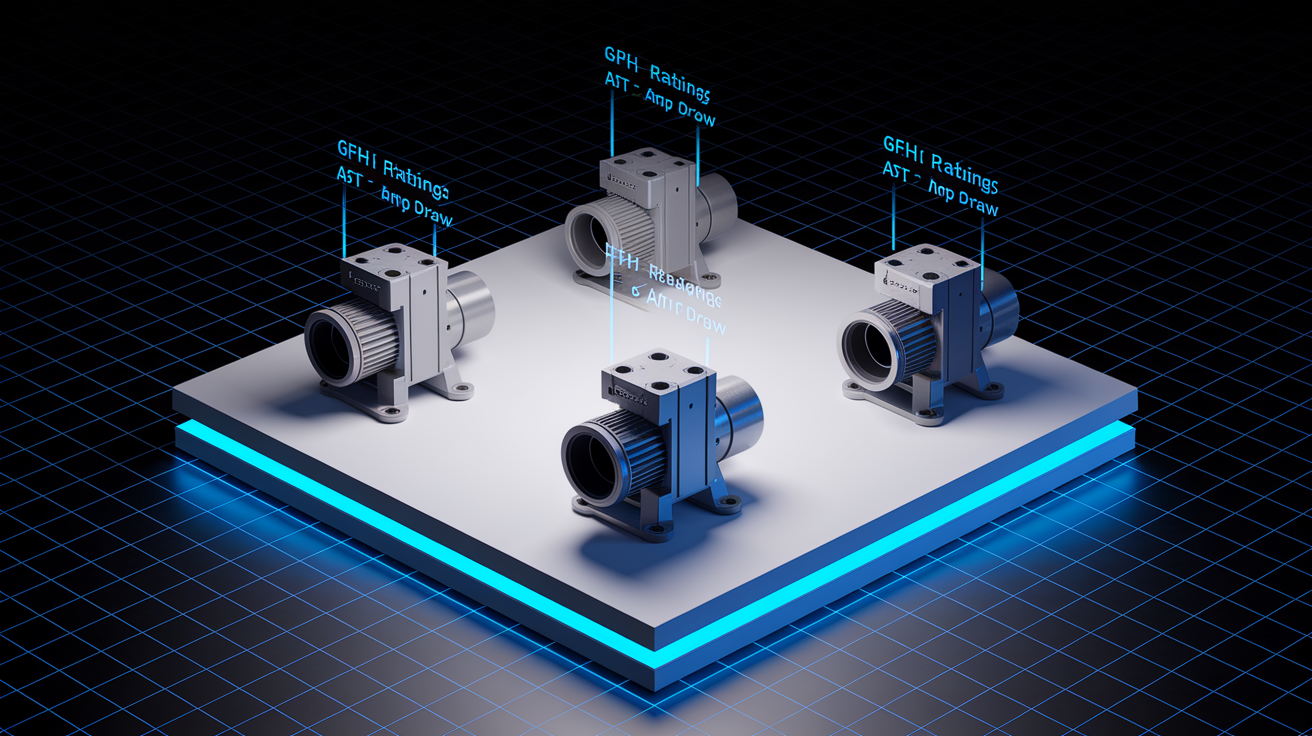
The Special CONNECT (BWSP) earns its best seller status because it balances performance and value for most homes. If you’re dealing with moderate water during storms or typical basement drainage, this model handles it without paying for capacity you won’t use. The Big Dog CONNECT (BWD12-120C) targets situations needing maximum pumping power. Larger basins, taller discharge heights, or properties with serious drainage problems that need faster water removal.
Performance splits these models in ways you can measure. The BWSP pumps 2,600 gallons per hour at ground level and keeps 1,850 GPH when pushing water 10 feet up, which comes out to 30.8 gallons per minute at basin level. The BWD12-120C jumps to 3,500 GPH at zero lift and holds 2,200 GPH at the 10 foot mark. That’s a 900 GPH advantage at basin level and 350 GPH when fighting gravity. The BWSP draws 18 amps while running and comes with a 1.6 amp smart charger. The BWD12-120C pulls 20 amps and includes a 20 amp charging system that refills the battery faster after it drains.
| Specification | Special CONNECT (BWSP) | Big Dog CONNECT (BWD12-120C) |
|---|---|---|
| GPH at 0 Feet | 2,600 | 3,500 |
| GPH at 10 Feet | 1,850 | 2,200 |
| Max Head Height | 16 feet | Not specified |
| Amp Draw | 18 Amps | 20 Amps |
| Charger | 12 VDC / 1.6 Amp | 12 VDC / 20 Amp |
| Runtime (1 Battery) | 48 hours | 40 hours |
| Runtime (2 Batteries) | 96 hours | 80 hours |
| Weight | 13.2 lbs | 28.5 lbs |
| Best For | Most residential applications, moderate water intrusion | High-capacity needs, large basins, severe drainage challenges |
| Where to Buy | Lowes, Ace Hardware, Home Depot, online retailers | Lowes, Ace Hardware, Home Depot, online retailers |
Budget planning goes beyond the pump’s price tag. You’re buying the BW-27-AGM battery separately because it’s made specifically for these systems but doesn’t come in the box. The WiFi Module (BW-WiFi2) adds remote monitoring to CONNECT models, also sold separately. Want dual battery runtime? The parallel jumper cable (PJC) connects two batteries together. Factor these add ons into your total cost, along with any discharge pipe or check valves your setup needs. Weight matters when you’re installing and doing future maintenance. The BWSP at 13.2 pounds lets one person handle it, while the BWD12-120C at 28.5 pounds might need two people to position safely in tight basin spaces.
You’ll find WatchDog backup pumps at Lowes, Ace Hardware, and Home Depot across the country, plus stores in Canada. Online buying gets you the same models delivered to your door and gives you time to research specs and read what other customers say before pulling the trigger. With 14,000 U.S. residents filing water damage claims every day, backup protection costs way less than one flooded basement. The company’s online comparison tool lets you look at all three backup models side by side, matching pumping capacity and runtime to your specific basement situation.
Installation Process for WatchDog Battery Backup Systems
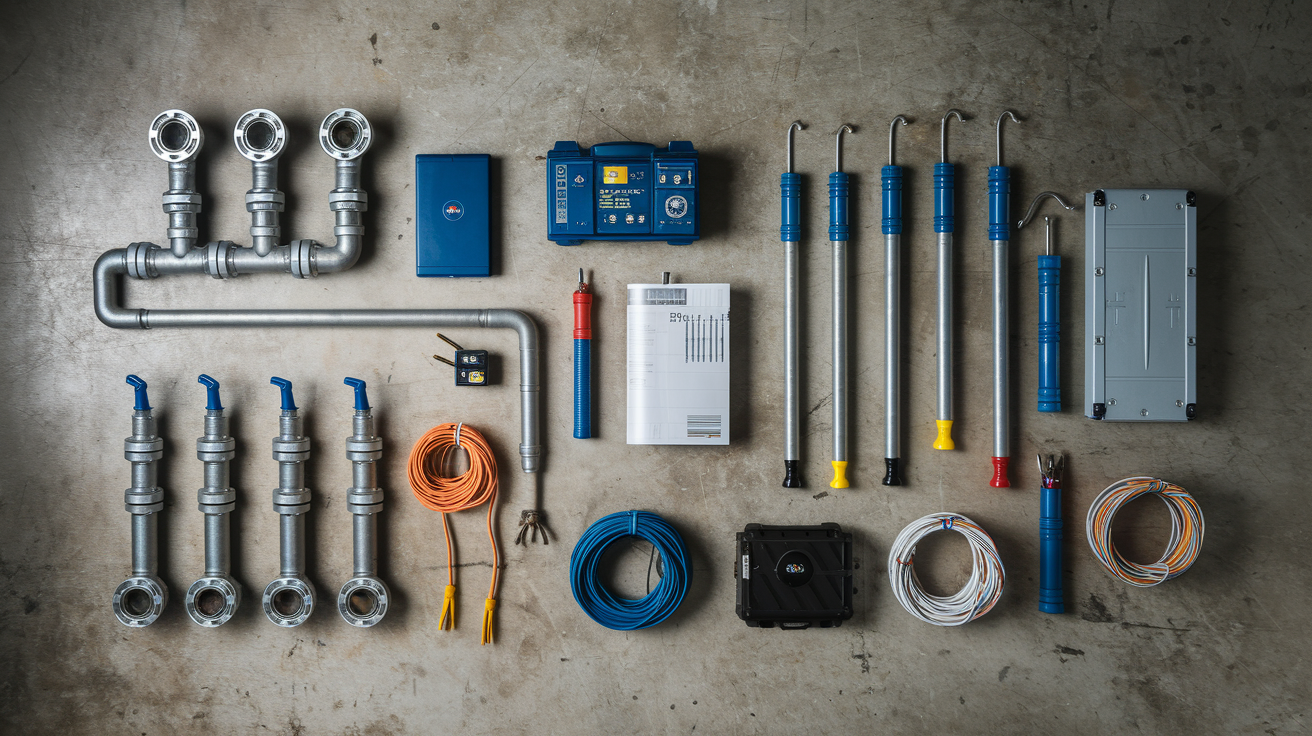
The piggyback installation puts the battery backup pump next to your existing AC primary pump in the same sump basin. Both pumps connect to a shared discharge pipe through separate check valves, stopping water from flowing backward through whichever pump isn’t running. During normal times, the primary handles everything while the backup stays on standby, watching power and basin water level. When the backup detects a trigger condition (power loss, primary failure, stuck float, or water level still rising), it automatically starts pumping through its own check valve and discharge path.
What’s in the box and what you’re buying separately:
- Included: backup pump unit, monitoring controller with battery cables, automatic charger, dual float switch assembly, battery box, 2 wire ties, manual
- Separate purchase: BW-27-AGM battery (required, doesn’t come with the pump)
- Separate purchase: check valve for discharge pipe (BW-CVK15 recommended)
- Separate purchase: discharge piping to reach wherever you’re draining
- Optional: WiFi Module BW-WiFi2 for smartphone monitoring
- Optional: parallel jumper cable (PJC) if you’re running two batteries for double runtime
- Optional: extra adapters or couplings depending on your existing plumbing
- Consider: verify your basin size before buying (pump dimensions 5.0 x 9.0 x 7.5 inches)
The Big Combo CONNECT (CITS-50) and standard Combo (CITE-33) combine primary and backup pumps into one preassembled unit. These combo systems show up with check valves, elbows, and vertical pipe sections already measured, cut, and glued together in the right configuration. You skip the step of figuring out discharge routing, measuring pipe lengths, and assembling pieces because the factory handled that work already. Installation time drops a lot compared to piecing together separate primary and backup pumps, and you eliminate potential leak points from bad glue joints or wrong pipe sizing.
The backup pump’s discharge port is 1.25 inch female national pipe thread (FNPT), and the package includes a 1.25 x 1.5 inch adapter for connecting to standard 1.5 inch discharge piping. The quiet check valve (BW-CVK15) prevents the water hammer bang when the pump shuts off and stops backflow that would refill your basin. The controller unit measures 10.25 x 17.375 x 14.5 inches and mounts on a nearby wall where you can see the front panel. Most basins give you enough room for piggyback setups, but measure your basin diameter and depth before buying. Cramming two pumps plus float assemblies into an undersized basin creates problems. If you’re working with a standard 18 inch basin with decent depth and your discharge piping is straightforward, most homeowners can handle the install. Complex discharge routing, modifications to existing check valve setups, or if you’re not sure about electrical connections, call a plumber or pump installer.
Battery Requirements and Dual-Battery Runtime Extension

The battery powers your backup pump when AC electricity isn’t available, so picking the right battery directly affects how long your basement stays dry during extended outages.
The Basement Watchdog Maintenance Free AGM Standby Battery (BW-27-AGM) is built specifically for these backup systems and gives you the recommended power source. AGM (absorbed glass mat) tech seals the battery completely, getting rid of maintenance tasks like checking water levels or adding distilled water that old school wet cell batteries need. The sealed design also prevents acid spills if the battery tips over during setup or gets bumped during operation. AGM batteries handle the deep discharge cycles that backup pumps demand better than car batteries, which are designed for short, high current engine starting rather than sustained pumping loads. The BW-27-AGM matches the voltage and capacity specs that WatchDog controllers expect, preventing compatibility issues you can get with generic marine or RV batteries.
Doubling your runtime needs a second battery connected through the parallel jumper cable accessory (PJC, sold separately). This simple cable links the positive terminals of both batteries together and the negative terminals together, basically creating one larger power source. The BWSP model runs about 48 hours on a single battery based on a 10% duty cycle, meaning the pump operates 10% of each hour and rests the other 90%. Add the second battery and that 48 hour window extends to 96 hours, four full days of backup protection. The BWD12-120C draws more power because of its higher pumping capacity, giving you 40 hours with one battery and 80 hours with two batteries under the same 10% duty cycle assumption.
Real world runtime depends on how often your pump actually runs, which varies a lot based on water coming in. Light groundwater seepage during a summer power outage might cycle the pump only 5% of the time, stretching your battery capacity beyond what the manufacturer estimates. Heavy rain combined with high water table conditions could push duty cycle above 15% or 20%, shortening available runtime. Battery age also matters because a three year old battery holds less charge than a fresh one, even with proper care. Water temperature affects pump efficiency slightly, and really cold basement temps reduce battery capacity. The 10% duty cycle gives you a realistic middle ground expectation, but understanding these variables helps you plan for worst case scenarios. The automatic charger keeps battery ready between discharge events, monitoring charge level and shutting off completely once the battery hits full capacity, preventing the overcharging damage that kills battery lifespan.
Smart Charging and Monitoring Technology in WatchDog Backup Pumps

The smart charger rated at 12 VDC and 1.6 amps (on the BWSP model) quickly refills battery capacity after a discharge event, then shuts off completely rather than continuing to trickle charge. This prevents the overcharging that slowly wrecks battery plates and shortens overall battery life. Old school trickle chargers keep pushing current into a battery even after it’s full, creating heat and causing internal damage over months and years. WatchDog’s approach charges fast when needed and then leaves the battery alone, getting you the most years of service before you need replacement.
The 24 hour monitoring controller tracks three critical systems at once. Pump mechanical operation, incoming AC power status, and battery voltage condition. The front panel display gives you visual status showing normal operation or identifying exactly which part needs attention. When the controller detects a problem, it triggers an audible alarm that continues for 24 hours, so you notice the issue even if you’re not near the basement when it starts. The display doesn’t just flash a generic warning light. It tells you specifically what’s wrong and often suggests the fix, like “Low Battery, Test or Replace Battery” or “Pump Did Not Start, Check Float Switch.”
Specific monitoring alerts and warnings the controller gives you:
- Power outage detection showing when AC electricity to the primary pump is lost
- Pump failure alerts showing the backup motor tried to start but didn’t run right
- Low battery warnings when voltage drops below the threshold needed for reliable operation
- Voltage monitoring status tracking battery charge level in real time
- Primary float switch malfunction detection if the float fails to trigger the pump
- Battery condition tracking catching degradation before total failure
The weekly automatic pump exercise runs the backup pump for a short cycle even when no water needs pumping. This keeps internal seals lubricated, prevents mineral buildup on the impeller, and verifies the motor still works correctly. Pumps that sit idle for months between actual use develop problems. Seals dry out, moving parts seize slightly, and performance drops. The exercise cycle catches these issues before an emergency happens, giving you time to service or replace the pump rather than discovering a dead backup system during the power outage when you actually need it.
WiFi Connectivity and Remote Monitoring for WatchDog CONNECT Models

The CONNECT designation on certain WatchDog models (like the BWSP and BWD12-120C) means the controller includes a USB port designed to connect with the optional WiFi Module. This WiFi Module (BW-WiFi2, purchased separately) bridges your backup pump system to your home’s wireless network, letting you monitor from your smartphone anywhere with internet access. Without the WiFi Module, CONNECT models work identically to standard versions. The USB port simply sits unused until you decide remote monitoring provides enough value to justify the extra cost.
Setup involves plugging the BW-WiFi2 module into the controller’s USB port, connecting the module to your home WiFi router following the included instructions, and downloading the dedicated Basement Watchdog smartphone app. Once you’re configured, the system sends text messages, emails, or push notifications straight to your phone when the controller detects any alarm condition. You get the same alerts the front panel display shows (power loss, pump failure, low battery, float malfunction) but received instantly rather than discovered hours later when you happen to walk past the sump basin. The app also shows current system status on demand, letting you check that everything’s operating normally even when you’re at work, on vacation, or anywhere else with cellular data or WiFi.
The Remote Terminal feature provides dry contact connections that integrate with professional home security systems or building automation equipment. This lets the backup pump’s alarm conditions trigger responses from other systems. Sending alerts through your existing security panel, activating additional warning devices, or logging events in facility management software. Property managers overseeing multiple buildings, homeowners with comprehensive smart home setups, or anyone who already monitors their property through a central control system can incorporate sump pump status into that infrastructure. The dry contacts close or open based on alarm conditions, providing a simple electrical signal that compatible monitoring equipment recognizes and responds to according to your configuration.
Dual Float Switch Technology in WatchDog Backup Systems

Single float switches fail when debris wraps around the float arm, when mineral deposits jam the pivot mechanism, or when plastic parts crack from years of temperature cycling and mechanical stress. A stuck float means your pump either runs continuously when it shouldn’t or doesn’t start when water rises. Either scenario creates problems. Unnecessary battery drain in the first case, basement flooding in the second. And you don’t discover the failure until the consequence is already happening.
WatchDog’s dual float switch system places two separate micro reed switches inside a protective cage that shields the components from debris while allowing water level changes to activate the switches. Micro reed switches use magnets and sealed contacts rather than mechanical pivots, getting rid of the most common failure point in traditional float designs. The protective cage catches debris, pet hair, or other basin junk before they reach the actual switches. When water level rises enough to trigger pumping, either float can activate the system. If one switch fails completely, the second switch still turns the pump on. This redundant design converts a single point of failure into a backup protection system that keeps functioning even with a degraded component.
The patented dual float switch design positions Basement Watchdog as the “most dependable float switch in the industry” according to the company’s own assessment, backed by more than 35 years of manufacturing experience. After the pump removes water and basin level drops, both float switches automatically reset to the off position, ready for the next cycle. You don’t manually reset anything or adjust any components. The system returns to standby monitoring mode on its own. The redundancy particularly matters for battery backup pumps because these systems often sit unused for months, only firing up during emergencies when you can’t afford a float switch failure to leave you unprotected.
Maintenance Requirements and Battery Replacement for WatchDog Systems

The weekly automatic pump exercise cycle handles preventive maintenance without any action from you. Every seven days, the system briefly runs the backup pump even when the basin is empty, keeping seals lubricated and internal parts moving. The smart charger monitors battery condition continuously and maintains charge without the overcharging that damages battery plates. These automatic features cut down the hands on maintenance schedule a lot compared to backup systems needing manual testing or adjustment.
Battery replacement typically becomes necessary every three to five years depending on how many discharge cycles it experiences and environmental factors like temperature extremes. Signs you need battery replacement include the controller showing low voltage warnings more often, shorter runtime during power outages than when the battery was new, or visible corrosion around the terminals. Physical battery swelling or cracks in the case mean immediate replacement. Don’t wait for the battery to fail completely during the next storm. Customer testimonials document WatchDog systems operating reliably for nine years with minimal maintenance, and one customer reported their previous unit ran continuously for more than three days during a hurricane while keeping the basement completely dry.
Routine maintenance checklist for WatchDog battery backup systems:
- Visual inspection every three months: check battery terminals for corrosion, look for cracks in battery case, verify controller display shows normal status, confirm pump and float switch move freely in basin
- Battery terminal cleaning annually: disconnect battery cables, scrub terminals with baking soda solution to remove corrosion, dry completely, reconnect cables tightly, apply terminal protector spray
- Discharge pipe check every six months: verify check valve isn’t stuck, confirm pipe joints stay sealed without leaks, test that discharge point outside remains clear of obstructions or ice in winter
- Float switch testing quarterly: manually lift each float to trigger pump activation, verify pump starts within two seconds, confirm pump shuts off when float drops, listen for unusual noises showing worn bearings or impeller damage
- Alarm testing every six months: press the test button on controller to verify audible alarm sounds clearly, check that front panel lights work, confirm notification alerts arrive on smartphone if using WiFi Module
- Controller review after each power outage or pump activation: document how long the backup ran, note remaining battery capacity shown on display, verify system reset to normal monitoring mode, check for any error codes or warnings
The maintenance checklist document (updated March 31, 2022, 274.4 KB file size) available from Basement Watchdog provides manufacturer specific guidance and a printable tracking sheet. Customer service at 800-991-0466 (Option 3, available 8am to 6pm Central time, Monday through Friday) answers questions about maintenance procedures or helps troubleshoot any concerns you notice during inspections. Keeping up with these simple checks prevents most operational failures and catches developing problems before they leave you unprotected.
Warranty Coverage and Support for WatchDog Battery Backup Pumps

Every WatchDog backup pump includes a standard two year limited warranty covering defects in materials and workmanship under normal residential use.
Buying the Basement Watchdog AGM battery (BW-27-AGM) at the same time as your backup pump adds an extra year to your warranty period, extending coverage to three years total. Registering your pump online within 60 days of purchase adds another year, bringing the maximum possible warranty to four years when you buy the recommended battery and complete registration promptly. This extended coverage costs nothing beyond the battery purchase you should be making anyway and the two minutes it takes to fill out the online registration form.
Customer service operates toll free at 800-991-0466 (press Option 3 when prompted) during business hours, 8am to 6pm Central Standard Time, Monday through Friday. The company backs this scheduled support with a free lifetime support commitment, meaning you can call for troubleshooting help, replacement part guidance, or technical questions even after your warranty expires. This matters years down the road when you need to replace a worn component or diagnose an issue with a pump that’s been protecting your basement for a decade.
Downloadable resources include a product manual (dated April 17, 2023, 1.5 MB file size) with complete installation instructions, electrical specs, and operational details. The troubleshooting guide (also dated April 17, 2023, 45.3 KB) walks through common issues, controller alarm meanings, and step by step diagnostic procedures. The maintenance checklist (dated March 31, 2022, 274.4 KB) provides a printable tracking sheet and recommended service intervals. All three documents download directly from the Basement Watchdog website, giving you immediate access to the information without waiting for mailed materials or searching through old paperwork.
Troubleshooting Common Issues with WatchDog Battery Backup Sump Pumps

The controller’s 24 hour monitoring capability turns diagnostic guesswork into straightforward problem identification. When something goes wrong, the front panel display shows exactly which component triggered the alarm and often suggests the specific action needed to fix it, like checking battery connections or testing the float switch operation.
| Alarm Type | Likely Cause | Recommended Action |
|---|---|---|
| Power Loss | Circuit breaker tripped or utility outage | Check breaker panel, verify other outlets in home, backup should activate automatically |
| Low Battery | Battery discharged from extended use or aging battery losing capacity | Allow 24-48 hours for recharge, test battery voltage, replace if more than 3-5 years old |
| Pump Failure | Motor thermal protection tripped, impeller jammed, or electrical connection loose | Let motor cool 30 minutes, check for debris in impeller, verify battery cable connections are tight |
| Float Malfunction | Debris blocking float movement or switch stuck in one position | Remove pump from basin, clean float assembly, manually lift float to verify free movement |
| Pump Did Not Start | Float switch not triggering or loose wire connection | Test float manually, inspect wire connections at controller and pump, verify battery voltage above 11.5V |
| Continuous Running | Check valve stuck open allowing water backflow or float stuck in up position | Check discharge pipe for stuck valve, clean or replace check valve, inspect float for binding |
Basic troubleshooting starts with verifying simple issues before assuming component failure. Check that battery cable connections stay tight at both the battery terminals and controller. Corrosion or loosening over time creates resistance that prevents proper operation. Test the float switches by manually lifting them to trigger pump activation, confirming both switches work independently. Pour water into the basin to verify the pump removes it efficiently and shuts off at the correct level. Listen for unusual motor sounds like grinding, squealing, or rattling that indicate bearing wear or impeller damage. The pump motor includes thermal protection that automatically shuts off the motor if it overheats, then resets after cooling. This safety feature prevents permanent motor damage but means the pump might stop temporarily during extremely heavy use.
Most homeowners can handle float testing, battery connection checks, and basic cleaning without special tools or technical knowledge. Issues needing professional attention include motor failures that persist after thermal reset, controller malfunctions that don’t resolve with simple resets, cracked or damaged pump housing, and situations where multiple components seem to fail at once. Download the troubleshooting guide (April 17, 2023 version, 45.3 KB file) for detailed diagnostic procedures matched to specific alarm conditions. When DIY troubleshooting doesn’t identify the problem or the fix requires replacement parts you’re uncertain about, customer service at 800-991-0466 during weekday business hours (8am to 6pm Central) provides phone support to walk you through the process or recommend the next steps.
Final Words
A watchdog sump pump battery backup gives you real protection when the power goes out or your primary pump quits.
Pick the model that matches your basement size and how long you need it to run. Get two batteries if storms last days in your area.
Set up the monitoring so you actually know when something’s wrong. Test it twice a year, keep the battery terminals clean, and replace the battery before it fails.
You’ve got the specs, the install steps, and the troubleshooting basics. Now you can make the call and stop worrying about what happens next time the lights go out.
FAQ
Does the Basement Watchdog charge the battery?
The Basement Watchdog does charge the battery using its built-in automatic smart charger. The charger (12 VDC/1.6 Amp on BWSP models, 12 VDC/20 Amp on BWD12-120C models) maintains maximum battery charge without overcharging, then shuts off completely once the battery reaches full charge.
Is a sump pump battery backup worth it?
A sump pump battery backup is worth it because it prevents basement flooding during the four critical failure scenarios: power outages, primary pump failure, stuck float switches, and extreme water influx exceeding primary pump capacity. With 14,000 daily water damage claims in the U.S., the investment protects against costly flood damage.
What battery can I use with a Basement Watchdog?
The Basement Watchdog works best with the Basement Watchdog Maintenance Free AGM Standby Battery (Model BW-27-AGM), which is engineered specifically for these backup systems. This sealed AGM battery provides 48 hours runtime on BWSP models and 40 hours on BWD12-120C models at 10% duty cycle.
How long does it take for a watchdog battery to charge?
The Watchdog battery charges quickly using the smart charger included with the system, though exact charge time varies based on battery depletion level. The 12 VDC/1.6 Amp charger (BWSP) or 12 VDC/20 Amp charger (BWD12-120C) automatically shuts off once the battery reaches full charge to prevent overcharging.
How long will a WatchDog backup pump run on battery power?
A WatchDog backup pump runs for 48 hours (BWSP) or 40 hours (BWD12-120C) on a single battery at 10% duty cycle. Runtime doubles to 96 hours (BWSP) or 80 hours (BWD12-120C) when using two batteries connected with a parallel jumper cable (Model PJC).
Can I add WiFi monitoring to my WatchDog backup pump?
You can add WiFi monitoring to WatchDog CONNECT models (BWD12-120C and BWSP) by purchasing the separate WiFi Module (Model BW-WiFi2). The module connects via USB cable and sends text, email, or push notifications through a dedicated smartphone app when issues occur.
What comes in the box with a WatchDog battery backup pump?
The WatchDog battery backup pump package includes the pump, monitoring controller with battery cables, automatic charger, dual float switch, battery box, two wire ties, and product manual. The battery (BW-27-AGM), check valve, discharge piping, and WiFi module must be purchased separately.
How does the dual float switch prevent backup pump failure?
The dual float switch prevents backup pump failure by using two independent micro-reed switches in a protective cage for redundant protection. If one float switch fails due to debris or mechanical wear, the second switch activates the pump, eliminating the single point of failure.
What warranty does WatchDog offer on battery backup pumps?
WatchDog offers a standard 2-year limited warranty on battery backup pumps. You gain an extra year by purchasing the BW-27-AGM battery and another year by registering online within 60 days of purchase, for a total possible coverage of four years.
When should I replace my WatchDog backup pump battery?
You should replace your WatchDog backup pump battery every 3-5 years depending on usage frequency and conditions. Replace sooner if you notice reduced runtime, slow charging, controller low battery warnings, or visible battery case swelling or corrosion.
What’s the difference between WatchDog combo systems and separate backup pumps?
WatchDog combo systems (Big Combo CONNECT CITS-50 and standard Combo CITE-33) include both primary and backup pumps preassembled with check valves, elbows, and measured piping already glued. Separate backup pumps require piggyback installation alongside your existing primary pump.
How often does the WatchDog backup pump test itself?
The WatchDog backup pump tests itself weekly through an automatic pump exercise cycle designed to prolong pump life. The controller also provides 24-hour continuous monitoring of pump, power, and battery conditions with front panel display and alarm notifications.