

You can’t fix flood damage with a mop and fan. Floodwater carries sewage, chemicals, and bacteria that make you sick, and getting materials dry within 24 to 48 hours is the only way to prevent mold from taking over your walls. The right equipment protects your health and gives you a real chance at salvaging your home. This guide covers the essential tools for safe flood cleanup, what to buy versus rent, and exactly when a situation’s too dangerous to handle yourself.
Essential Flood Cleanup Equipment: Your Complete Tool and Safety Gear Guide

Floodwater’s never just water. It’s carrying sewage, chemicals, bacteria, stuff that can make you sick for real. Getting the right equipment matters for two reasons: keeping yourself safe from contamination and getting things done fast before mold sets in. Without proper gear, you’re looking at infection risks, breathing problems from mold spores, chemical hazards that might not show up until days later.
Flood cleanup breaks into three phases. Safety first means gearing up completely before you touch anything. Then comes water removal and drying, working fast to pull out standing water and drop humidity within 24 to 48 hours. Finally, cleaning and demolition takes care of contaminated surfaces and materials that can’t be saved. Each phase needs its own tools, and jumping ahead creates problems.
Personal Protective Equipment (PPE). Purchase it, don’t rent:
• Waterproof boots with steel toe protection to prevent puncture wounds and contamination exposure
• Rubber gloves, elbow length and chemical resistant, protecting hands and forearms from sewage and cleaning agents
• Safety goggles or full face shield to stop splash contamination to your eyes and face
• N95 respirator minimum for general cleanup, P100 recommended if you see visible mold
• Waterproof suit or Tyvek coveralls creating a barrier between floodwater contaminants and your skin
• Heavy duty work gloves for demolition involving sharp debris and building materials
Water Removal and Drying Equipment:
• Submersible pump rated for dirty water if there’s debris, with 1800 to 3000 GPH capacity for residential flooding
• Wet/dry vacuum with 5 to 6+ gallon tank (12+ gallons for extensive flooding) to pull water from floors, carpets, under cabinets
• Dehumidifier sized right. 30 to 50 pint capacity for rooms, 70+ pint for basements and severe flooding
• Air movers or industrial fans. Centrifugal type for targeted carpet and upholstery drying, axial type for large area ventilation
• Moisture meter with both pin type and pinless detection to verify dryness before you rebuild anything
• Portable generator rated 3500 to 5000W to power multiple tools at once during outages
• Outdoor rated extension cords, 12 gauge minimum, to safely deliver power to equipment
• Battery powered LED work lights or headlamps for visibility in dark basements and crawl spaces
• Squeegee and heavy duty mop to push water off surfaces and absorb what’s left
Cleaning, Disinfection, and Demolition Supplies:
• EPA registered disinfectant or bleach solution (1 cup bleach per gallon water) for sanitizing contaminated surfaces
• Scrub brushes with stiff bristles and microfiber cloths for applying cleaning solutions and wiping surfaces
• Pry bar and crowbar for removing baseboards, trim, damaged building materials
• Utility knife and drywall saw for cutting clean lines when removing saturated drywall
• Shovel with long handle for scooping mud and debris from basements and low areas
• Heavy duty contractor grade trash bags rated 3+ mil thickness to hold waterlogged materials without tearing
• Multiple 5 gallon buckets for mixing cleaning solutions and collecting debris
| Equipment Type | Typical Rental Cost | Purchase Cost | Recommendation |
|---|---|---|---|
| Submersible Pump (1800+ GPH) | $50-80/day | $150-400 | Rent unless flood-prone area |
| Wet/Dry Vacuum (6-12 gal) | $25-40/day | $150-300 | Purchase – useful for future maintenance |
| Dehumidifier (70+ pint) | $40-60/day | $200-400 | Rent for one-time event, purchase if repeated risk |
| Air Mover | $30-50/day | $150-350 | Rent – professional models more effective |
| Moisture Meter | $15-25/day | $30-150 | Purchase basic model if in flood-prone area |
| Generator (5000W) | $75-150/day | $500-1200 | Rent unless frequent power outages expected |
| Complete PPE Kit | Not typically rented | $80-150 | Always purchase – safety not negotiable |
Start with PPE before anything else. Don’t compromise on safety gear, even if it means delaying cleanup by a few hours to get proper equipment. Water removal equipment needs to start immediately, so rent if you don’t own it. Drying equipment has to run continuously for 3 to 5 days minimum, sometimes up to two weeks for severe flooding. Calculate rental costs carefully since a $50 per day dehumidifier rental becomes $250 to 350 for the full drying period.
Turn off circuit breakers before working near standing water, and run generators outdoors only to prevent carbon monoxide poisoning. Basic hand tools and cleaning supplies should be purchases since you’ll need them for the entire cleanup process. A typical complete rental package runs $200 to 400 per day, so equipment investments make sense if you face repeated flooding risks. A moisture meter’s particularly worthwhile for flood prone areas at $30 to 80, paying for itself by preventing costly mold problems from rebuilding too early.
When to Call Professionals: DIY Scope vs Professional Water Damage Restoration
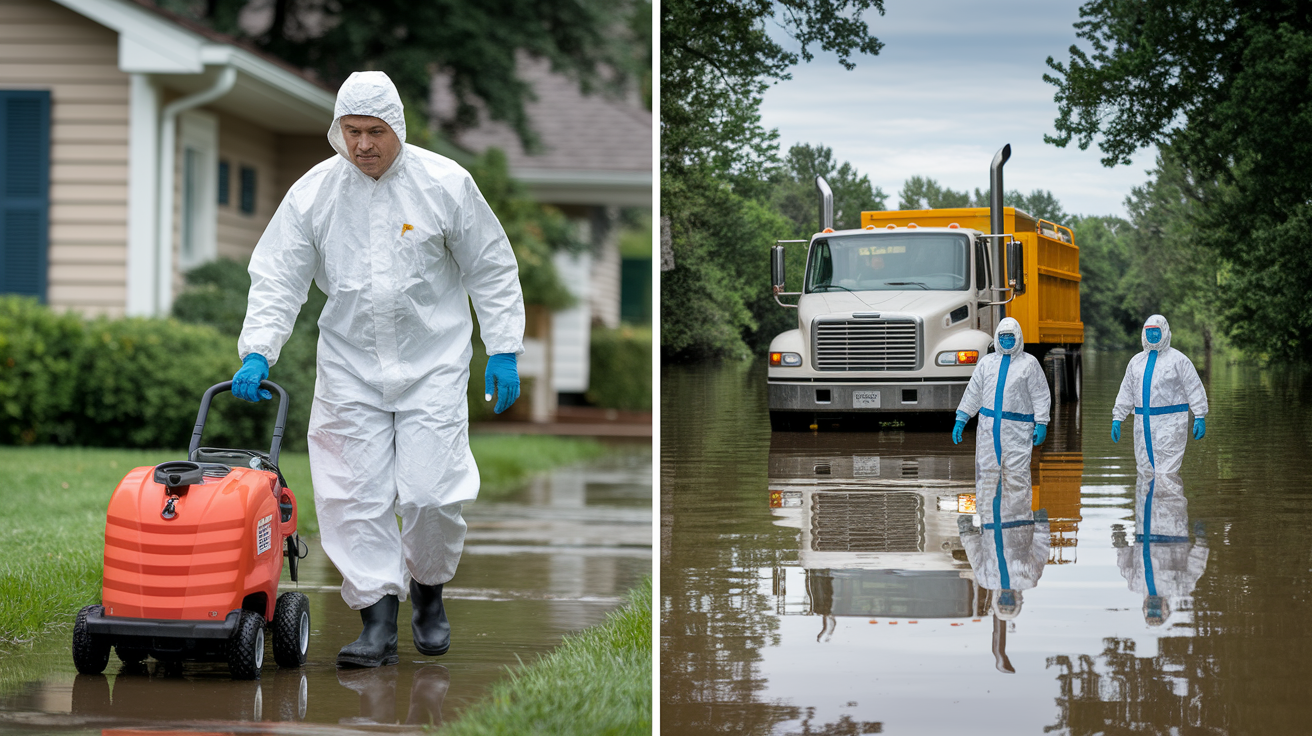
Many flood cleanup tasks fall within DIY capability when you’ve got proper tools and follow safety protocols. But certain situations exceed what’s safe or effective for homeowners to handle, and recognizing those limits prevents health risks and costly mistakes.
Call licensed professionals immediately when:
• Sewage contamination or Category 3 black water is present anywhere in the flooded area
• Structural damage is visible, including sagging ceilings, buckled floors, compromised support beams
• Extensive mold growth covering more than 10 square feet has already established before cleanup starts
• Flooding affects multiple rooms or entire levels of your home beyond single room containment
• Your electrical system was submerged and needs professional inspection and repair before restoration
• Insurance claim documentation requires certified restoration work and professional moisture mapping
Professional restoration companies bring industrial equipment you can’t rent locally, including truck mounted water extractors and commercial dehumidifiers with 150+ pint daily capacity. They’re trained in safe sewage remediation protocols that protect workers and prevent cross contamination. Mold containment and removal requires specific certifications and equipment like negative air machines and HEPA filtration.
Professionals understand structural drying for wall cavities and hidden spaces where moisture meters can’t reach. They complete the job faster with experienced crews and commercial equipment. They handle proper disposal of contaminated materials following EPA guidelines. Most importantly, they provide documentation that meets insurance requirements for claims processing.
There’s middle ground between full DIY and hiring out everything. You can handle initial water removal and demolition prep work even when professionals handle specialized tasks like mold remediation, electrical system repair, structural assessments. Doing preparatory work yourself cuts labor costs significantly. Get multiple estimates from licensed restoration companies and verify their insurance coverage and certifications. Understand exactly what’s included in contracts and what remains your responsibility.
DIY is appropriate for clean water situations (Category 1 from a broken supply pipe or appliance leak) affecting a single room when you respond within 24 to 48 hours. Beyond that scope, at least get a professional assessment before committing to full DIY cleanup.
Water Extraction and Structural Drying Equipment for Flood Restoration
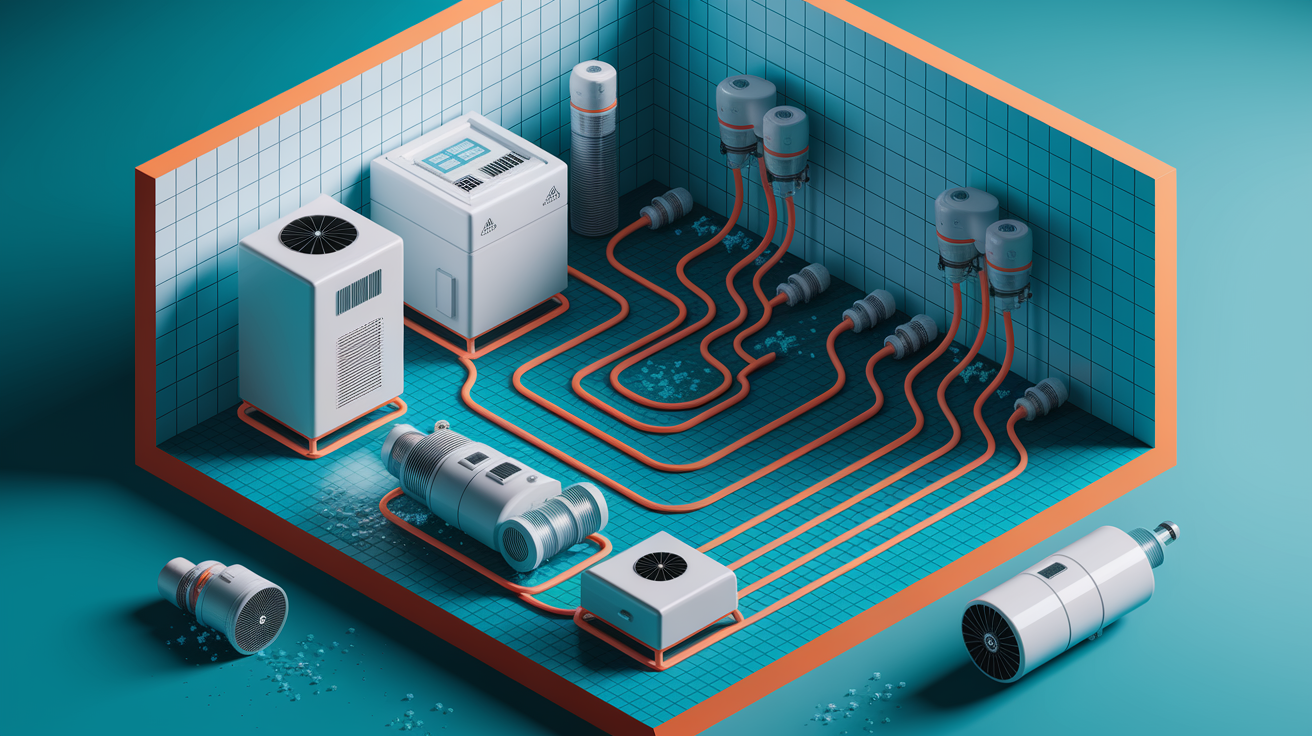
Effective flood cleanup requires immediate water extraction followed by thorough structural drying. Standing water needs removal within the first few hours, and materials must reach safe moisture levels within 24 to 48 hours to prevent mold growth and secondary damage that spreads beyond the original flood zone.
Submersible Pumps and Wet/Dry Vacuums for Water Removal
Dirty water pumps handle sewage, mud, debris up to 3/4 inch diameter, making them essential for basement floods and contaminated water. Clear water pumps work for cleaner sources like broken supply lines but clog easily if debris enters the system. Pumping capacity matters. Look for 1800 to 3000 gallons per hour (GPH) for residential applications, which removes several inches of standing water from a basement in under an hour. Use submersible pumps for deep standing water over 2 inches. Switch to wet/dry vacuums for detailed extraction once depth drops below an inch.
Wet/dry vacuum tank capacity determines how often you stop to empty. Minimum 5 to 6 gallon capacity works for small room flooding. Get 12+ gallon capacity for extensive water coverage to reduce interruptions. These vacuums reach under cabinets, around toilet bases, into corners where standing water collects but pumps can’t access. They handle both liquids and the mud or debris mixed into floodwater.
Maintenance keeps equipment running without failures during multi hour extraction sessions. Clean or replace filters every few hours during heavy use since clogged filters kill suction power. Inspect vacuum hoses for cracks or leaks before starting, since even small holes reduce effectiveness. Check power cords and connections to prevent electrical shorts around water. Empty tanks before they reach full capacity to maintain maximum suction. For pumps, check intake filters and clean debris that restricts flow. Verify your power source can handle the amperage draw, especially when running off a generator.
Dehumidifiers for Moisture Control
Dehumidifier capacity gets measured in pints per day, indicating how much water the unit removes from air in 24 hours. Small rooms and moderate dampness need 30 to 50 pints per day. Basements and severe flooding require 70+ pints daily capacity to drop humidity fast enough to prevent mold. These units must run continuously for several days minimum. Three to five days handles typical single room flooding. Extensive damage can require up to two weeks of continuous operation.
Check water collection tanks daily for mold or debris buildup and empty before they reach capacity. Some models offer continuous drain hoses that eliminate manual emptying. Inspect filters every few months during normal use, but check weekly during flood restoration since airborne debris clogs them faster. Clean coils on the evaporator and condenser every few months to maintain optimal efficiency. Dirty coils force the unit to work harder and remove less moisture.
Position dehumidifiers in closed spaces like basements for maximum effectiveness. Open windows and doors dilute the drying effect by introducing humid outdoor air. Target humidity levels below 50 to 55% throughout the affected space. Lower’s better, but going below 30% wastes energy without additional benefit. Energy efficiency matters during extended runtime since these units draw 300 to 700 watts continuously. Look for Energy Star rated models if purchasing rather than renting.
Air Movers and Fans for Accelerated Drying
Centrifugal air movers create targeted, high velocity airflow focused on specific areas. They direct concentrated air across carpets, upholstery, wall surfaces to accelerate evaporation. Axial air movers provide broader coverage with lower velocity, ideal for circulating air throughout large rooms and open areas. Professional restoration uses both types simultaneously for maximum effectiveness.
Position air movers 6 to 12 inches from the surface you’re drying. Aim them directly at saturated carpets, hardwood floors, drywall sections. Keep safe distances from any wet electrical sources to prevent shorts or electrocution. Point units at angles that move air across surfaces rather than straight into them. Deploy multiple units simultaneously since drying rates increase significantly with more air movement. A single unit in a 200 square foot room takes days longer than three units covering different zones.
Monitor progress every few hours by checking surface moisture levels with your moisture meter. Move air movers to new positions as areas dry to optimize equipment usage. Regular household fans only work as supplemental tools since they lack the focused power and air velocity needed for flood restoration. They help when combined with dehumidifiers but can’t replace professional air movers for serious water damage. Clean filters routinely during operation and store units in dry, cool places after use to prevent moisture accumulation inside the equipment.
Deciding between rental and purchase depends on equipment type and your situation. Professional grade water extraction and drying equipment performs significantly better than consumer models available at home centers. Rental costs run $50 to 150 per day for submersible pumps, $30 to 60 per day for commercial dehumidifiers, $30 to 50 per day for air movers. Calculate total cost across the 3 to 5 day minimum runtime. A 70 pint dehumidifier rented for five days costs $150 to 300, approaching the purchase price of a consumer model.
Wet/dry vacuums are worth purchasing at $150 to 300 for a quality model since they’re useful for future home maintenance beyond flood cleanup. Run all drying equipment continuously without interruption. Stopping overnight extends the drying timeline and gives mold a head start.
| Equipment Type | Capacity/Coverage | Rental Cost (per day) | Typical Runtime |
|---|---|---|---|
| Submersible Pump | 1800-3000 GPH | $50-80 | 2-6 hours for initial extraction |
| Wet/Dry Vacuum 6-12 gal | 5-6 gallon tank minimum | $25-40 | 4-8 hours for detailed extraction |
| Dehumidifier 30-50 pint | Small rooms, up to 300 sq ft | $30-45 | 3-7 days continuous |
| Dehumidifier 70+ pint | Basements, 500-1000 sq ft | $40-60 | 5-14 days continuous |
| Air Mover | Single room coverage | $30-50 | 3-7 days continuous |
Cleaning Supplies and Disinfection Tools for Contaminated Flood Water

Floodwater contamination includes sewage, chemicals, bacteria, substances that cause serious health problems. Proper disinfection after water removal prevents illness and stops mold before it starts. Surfaces must be completely dry before any reconstruction begins, or you’re sealing moisture and contaminants inside walls and floors.
Essential cleaning and assessment supplies:
• EPA registered disinfectant or antimicrobial solution for treating all hard surfaces exposed to floodwater
• Bleach solution mixed at 1 cup per gallon of water for non porous surfaces like tile, concrete, metal
• Scrub brushes with stiff bristles for floors and concrete, softer bristles for painted walls and wood
• Sponges and microfiber cloths for wiping down surfaces and absorbing excess cleaning solution
• Mop and bucket with wringer for removing residual moisture after disinfection
• Squeegee for pushing standing water and cleaning solutions off smooth surfaces before mopping
• Moisture meter with pin type probes for deep readings in wood and drywall, plus pinless sensors for non destructive surface scanning
Sanitizing follows a specific sequence. Remove debris and extract all standing water first. Apply disinfectant to every surface the floodwater touched, including walls up to the flood line plus an additional 12 inches above, the entire floor surface, cabinet interiors, door frames. Bleach solutions need a 10 minute contact time to kill bacteria and viruses effectively. Don’t wipe it off immediately.
Scrub with stiff brushes, especially on porous surfaces like concrete where contaminants penetrate deeper. Some disinfectants require rinsing with clean water after the contact period. Dispose of all cleaning water as contaminated waste, not down household drains that might already be compromised.
Verification tools confirm surfaces are actually dry and safe for reconstruction, not just dry to the touch. Moisture meters with pin type probes give accurate deep readings inside wood and drywall by inserting two pins that measure electrical resistance. Target moisture content below 15% for wood framing and below 1% for drywall before closing anything up. Pinless electromagnetic sensors scan larger surface areas faster without damaging materials, useful for checking entire walls and floors.
Take multiple readings throughout affected areas since moisture distributes unevenly. Conduct daily moisture checks during the first week, then transition to weekly monitoring. Document all readings with photos and notes for insurance claims and to confirm readiness before drywall and flooring go back in.
Supplemental tools include power washers for cleaning exterior surfaces and concrete basement floors, spray bottles for applying disinfectant to targeted spots, air purifiers or ozone generators for severe odor removal after cleaning. Hot water improves sanitization effectiveness when available, but cold water with proper disinfectant and contact time still works when plumbing isn’t functional.
Demolition and Removal Tools for Damaged Materials in Flood Cleanup

Porous materials like drywall, insulation, carpet padding, baseboards must be removed if they stayed saturated for more than 48 hours. These materials become mold growth sites and lose structural integrity when waterlogged, making them impossible to save.
Essential demolition tools start with a pry bar and crowbar for removing baseboards, trim, molding without damaging salvageable materials above the flood line. A utility knife scores drywall and cuts carpet and padding into manageable sections for disposal. A drywall saw cuts clean horizontal lines, typically 12 to 24 inches above the flood line to ensure you’re removing all contaminated material.
Keep a drill and screwdriver set handy for removing fasteners from cabinets and fixtures. A hammer handles stubborn materials that won’t release easily. A shovel with a long handle scoops mud and debris from basement floors and corners where it accumulates. Keep your wet/dry vacuum running during demolition to collect dust and small debris, since these vacuums handle both solids and liquids without switching equipment.
Cut carefully to minimize airborne dust, especially if mold’s visible. Wear your PPE during all demolition work since saturated materials are heavy, create sharp edges when cut, release mold spores and contaminants into the air.
Disposal supplies include heavy duty contractor grade trash bags rated at least 3 mil thickness to contain waterlogged materials without tearing. Regular garbage bags rip when you load soaked drywall or insulation. Mark contaminated waste clearly, especially if sewage was involved. Check local disposal requirements for flood damaged materials since many landfills have special protocols during flood events.
Consider renting a dumpster for extensive damage. A 10 yard dumpster handles a single room. A 20 yard size works for whole house flooding. Proper handling prevents contamination spread to clean areas of your home and protects sanitation workers.
Final Words
Getting the right tools before you start makes flood cleanup safer and faster. Start with protective gear, then move to water removal and drying equipment that needs to run for days, not hours.
Most clean water floods in a single room are manageable with rented pumps, a good shop vac, and solid PPE. But if you’re looking at sewage, structural damage, or extensive mold, stop and call a licensed pro.
Know what tools you need for flood cleanup, rent what makes sense for a few days of hard use, and buy the basics you’ll use again. The moisture meter and PPE kit are worth owning if your home sits in a flood-prone area.
Measure twice, dry completely, and don’t rush the rebuild.
FAQ
Q: What should you use to clean up a flood?
A: To clean up a flood, you need protective gear (waterproof boots, gloves, N95 respirator), water removal equipment (submersible pump or wet/dry vacuum), drying tools (dehumidifier and air movers), and EPA-registered disinfectant for sanitizing all contacted surfaces after extraction.
Q: What equipment is needed to clean a flooded basement?
A: Equipment needed to clean a flooded basement includes a submersible dirty water pump (1800-3000 GPH capacity), wet/dry vacuum, 70+ pint dehumidifier, air movers, moisture meter, waterproof PPE, pry bar for removing damaged materials, and heavy-duty trash bags for disposal.
Q: What protective gear do you need for flood cleanup?
A: Protective gear needed for flood cleanup includes waterproof boots (steel toe recommended), elbow-length chemical-resistant rubber gloves, safety goggles or face shield, N95 respirator or higher-grade mask, and waterproof coveralls to protect against contaminated floodwater containing sewage and chemicals.
Q: How much does it cost to rent flood cleanup equipment?
A: Renting flood cleanup equipment typically costs $200-400 per day for a complete package. Individual items run $50-150 daily for pumps, $30-60 for dehumidifiers and air movers, with 3-5 day minimum runtime required for thorough drying before repairs can begin.
Q: When should you call professionals for flood cleanup instead of DIY?
A: You should call professionals for flood cleanup when sewage or Category 3 black water is present, visible structural damage exists, mold covers more than 10 square feet, flooding affects multiple rooms, electrical systems were submerged, or insurance requires certified documentation.
Q: What type of pump removes standing floodwater?
A: A submersible dirty water pump removes standing floodwater, handling debris and contamination with capacity of 1800-3000 gallons per hour for residential use. Clear water pumps work for clean supply line leaks, while dirty water pumps handle sewage-contaminated flooding.
Q: How long do dehumidifiers need to run after flooding?
A: Dehumidifiers need to run continuously for 3-5 days minimum after flooding, and up to 2 weeks for extensive damage. Target humidity below 50-55% and verify dryness with moisture meter readings below 15% for wood and 1% for drywall before repairs.
Q: What cleaning solution kills bacteria in floodwater?
A: EPA-registered disinfectant or bleach solution (1 cup per gallon of water) kills bacteria in floodwater on non-porous surfaces. Apply to all contacted surfaces, allow 10-minute contact time, scrub with stiff brushes, and dispose of cleaning water as contaminated waste.
Q: What tools remove water-damaged drywall?
A: Tools needed to remove water-damaged drywall include a utility knife for scoring, drywall saw for cutting clean lines 12-24 inches above the flood line, pry bar for pulling sections, hammer for stubborn areas, and wet/dry vacuum for cleanup during demolition.
Q: Do you need a moisture meter for flood cleanup?
A: A moisture meter is essential for flood cleanup to detect hidden dampness and verify surfaces are dry before reconstruction. Use pin-type for deep readings in wood and drywall, pinless for surface scanning, checking daily the first week then weekly thereafter.
Q: What size wet/dry vacuum works for home flooding?
A: A wet/dry vacuum with 5-6 gallon minimum capacity works for moderate home flooding, while 12+ gallon tanks handle extensive water damage. Choose models that extract water from floors, carpets, furniture, and hard-to-reach spaces like under cabinets with proper filter maintenance.
Q: How many air movers are needed for flood drying?
A: Multiple air movers enhance drying effectiveness for flood cleanup. Position centrifugal air movers 6-12 inches from carpets and upholstery for targeted drying, and use axial air movers for broad ventilation in large areas, running all units continuously for several days.
Q: What trash bags hold waterlogged flood debris?
A: Heavy-duty contractor-grade trash bags with 3+ mil thickness hold waterlogged flood debris including soaked insulation, carpet padding, and damaged materials. These tear-resistant bags contain contaminated items for proper disposal according to local flood debris protocols.